




Together for tomorrow
Together in a culture where everyone is a director at their own desk
We’re on a constant journey to create a better tomorrow for our employees. We do that with common sense, flexible working frameworks that make room for life, autonomous and accountable ways of working, and great social activities.

Vision
We contribute to a world where kindness is healthy business
To us, goodness means treating the entire value chain with a focus on sustainable, long-term decisions. Morningtrain is not here to win anything or beat anyone—we simply want to still be here in 100 years.
The culture as a whole
We believe that when we meet our surroundings with kindness and decency, it attracts colleagues, customers, and partners with the same mindset. And when good people meet, extraordinary collaborations are created, which provide healthy business for all parties.
This creates a self-reinforcing balance, where kindness leads to healthy business, and healthy business creates a foundation for more kindness. We think this is just common sense.
“Goodness is, in reality, simply the headline for the UN Sustainable Development Goals. We believe that, as a company, you should choose the category you impact the most in your value chain and then focus on addressing it with the future in mind—for Morningtrain, that category is the labour market, as we are a people business.”
Thomas Østerkjerhuus, CEO, Morningtrain ApS
What if every day was a party?
At Morningtrain, we do not cut down trees, extract cobalt, or pollute wastewater.. Instead, we consume labour market resources. And although the former topics are important, we want to make an effort where we can have the greatest impact.
When we commit to “contributing goodness”, we translate that into creating the workplaces of the future—building a culture based on meaning and on enjoying going to work. That is our shared goal, and that is meaningful to us.
Morningtrain is fundamentally built on a desire to be a great place to come to work, which has fostered an internal mantra at Morningtrain that goes:
“What if we always had some form of party?”
The mantra is about creating a challenging and fun everyday life for our colleagues, which provides a fantastic foundation for well-being and self-development for everyone on the team.
This vision obligates us to have supportive behavior in everyday life.
Initiatives to Create Colleagues in Balance in Everyday Life
- Our coaching programme is designed to support a day-to-day where we do not simply solve colleagues’ challenges for them, but instead give them the tools to solve them themselves.
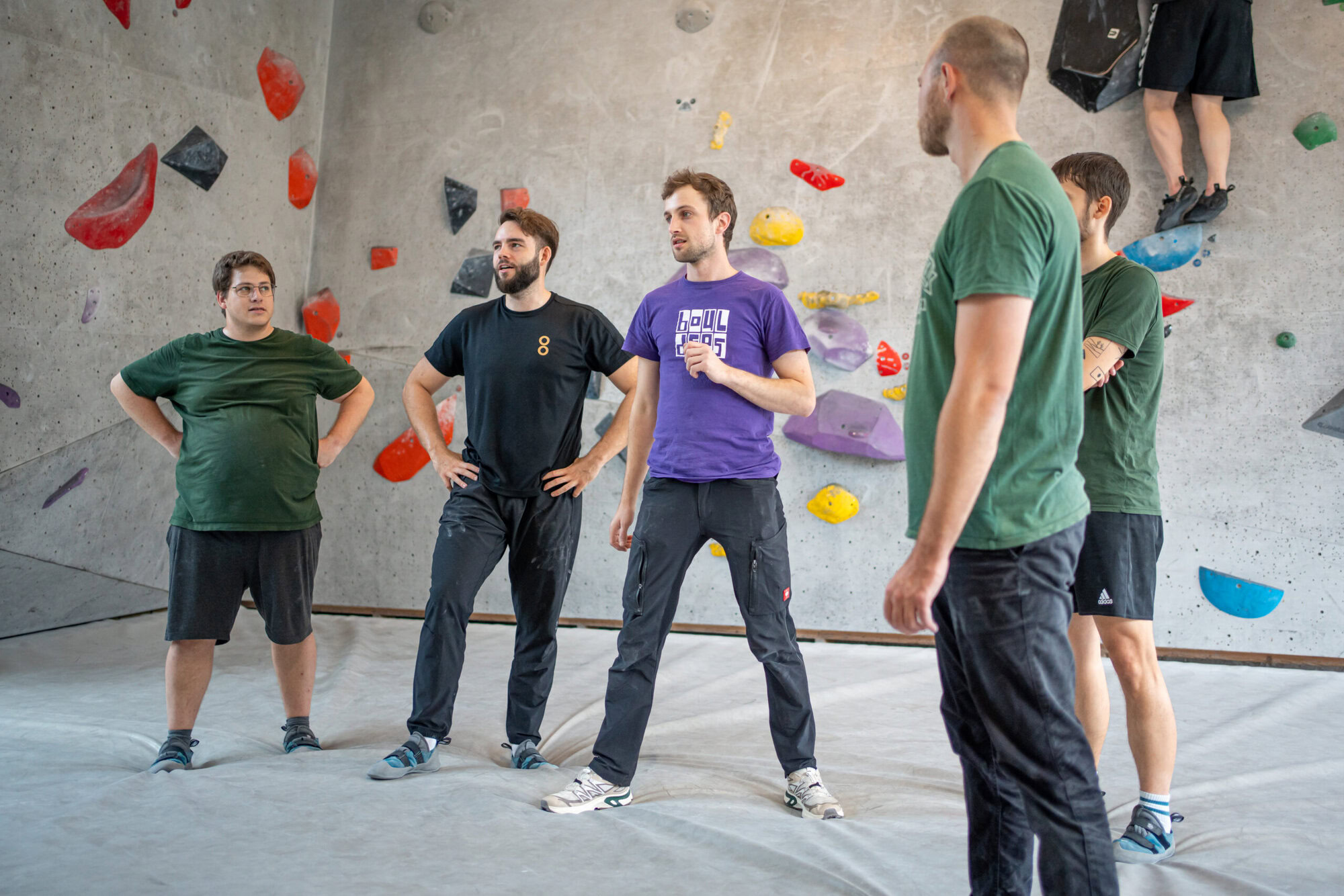
- Our paid sports during working hours are intended to promote physical wellbeing among our colleagues.
- We have clarified our colleagues’ personality profiles in the form of LEGO bricks. This makes it easier to understand your colleagues and their reaction patterns.
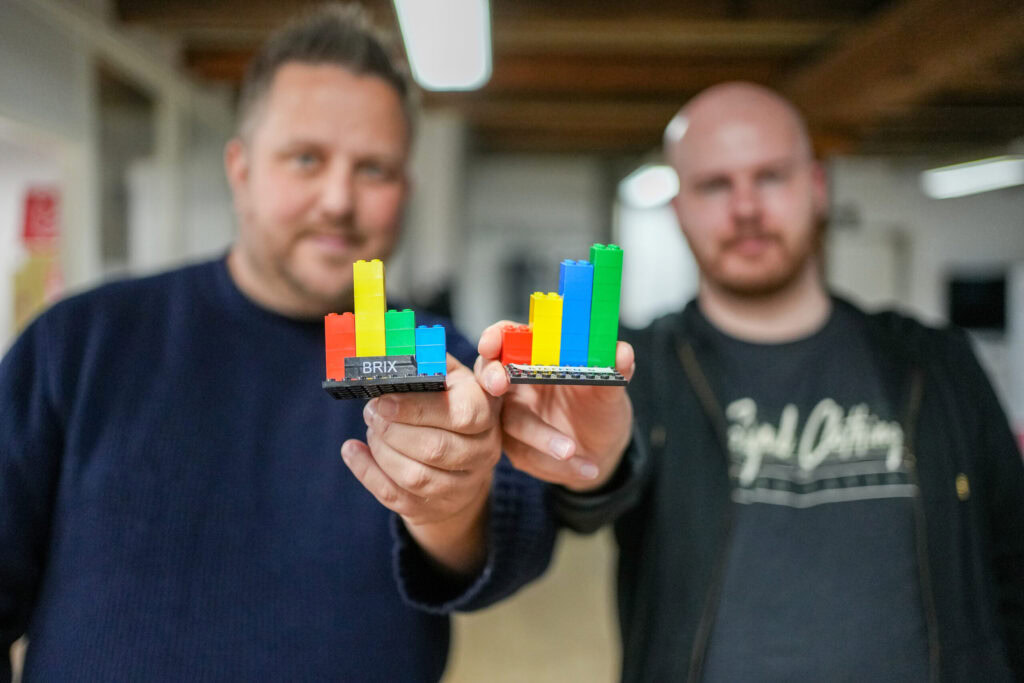
- Encouragement to take power breaks: When you need a break, take a break. Play table tennis, go for a walk, play PlayStation, take a nap, or have a cosy chat in the lounge. Breaks are not scheduled, counted, or anything like that. As long as you deliver your work on time, take the breaks you need, when you need them.
- You manage your own workday within the established framework, as long as it does not compromise the quality of your work or collaboration with your colleagues, and as long as it does not have negative financial consequences.
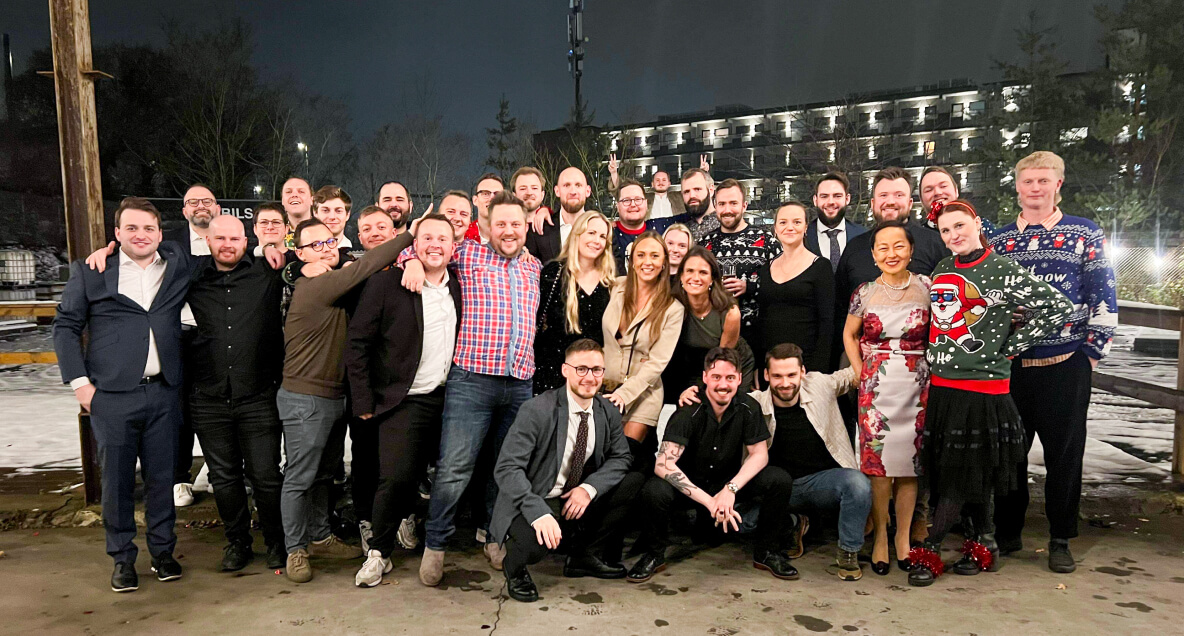
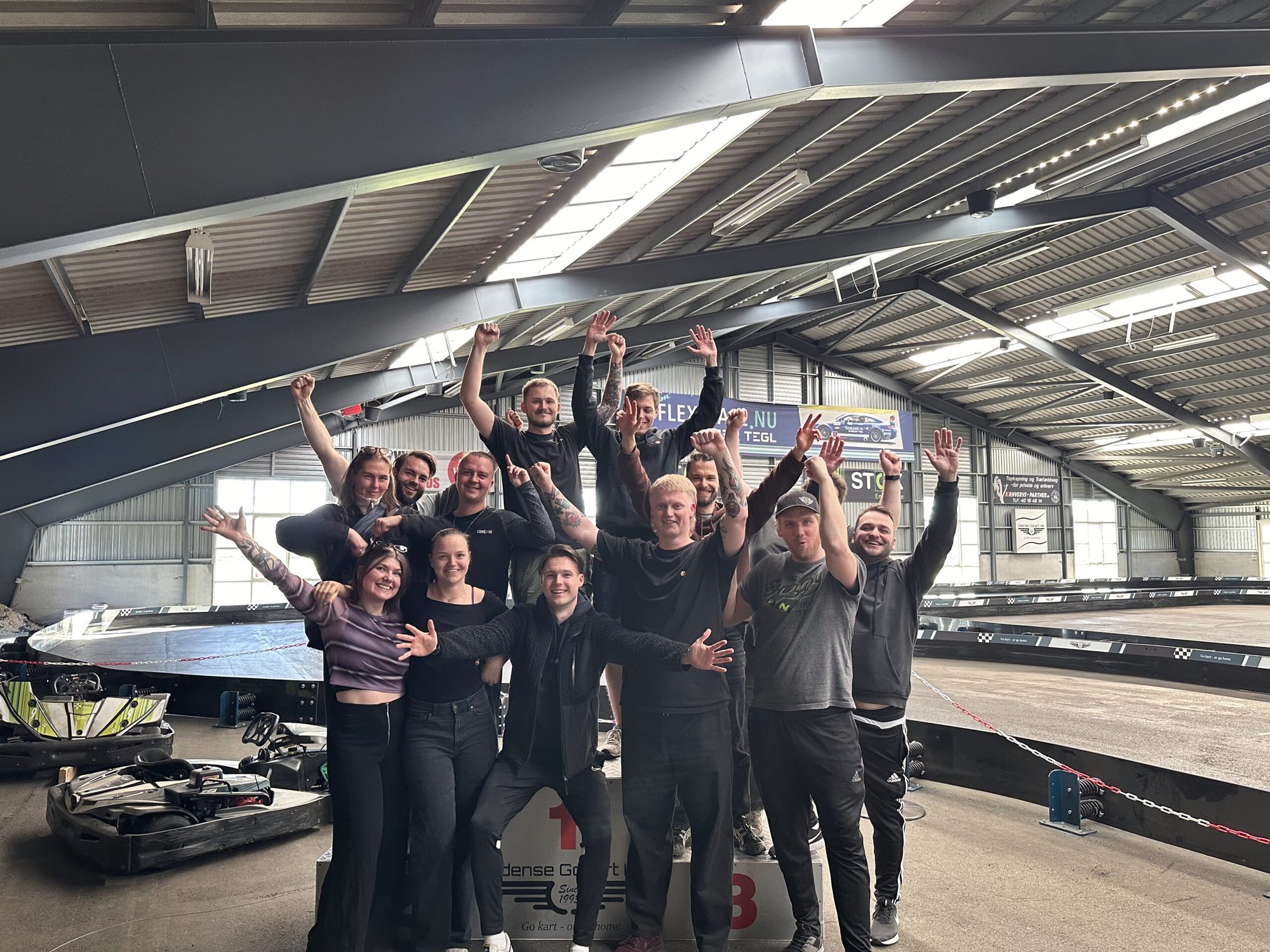
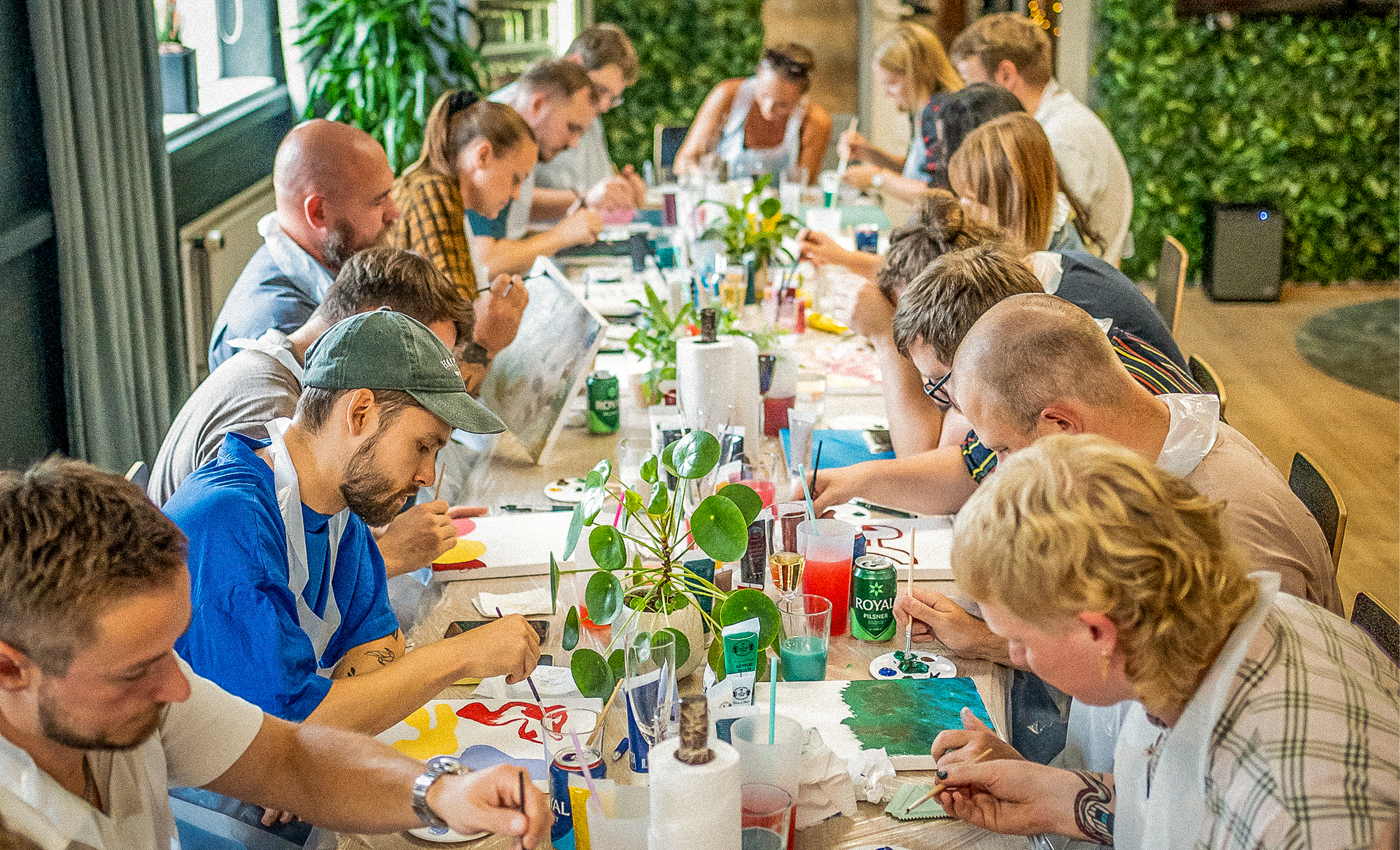
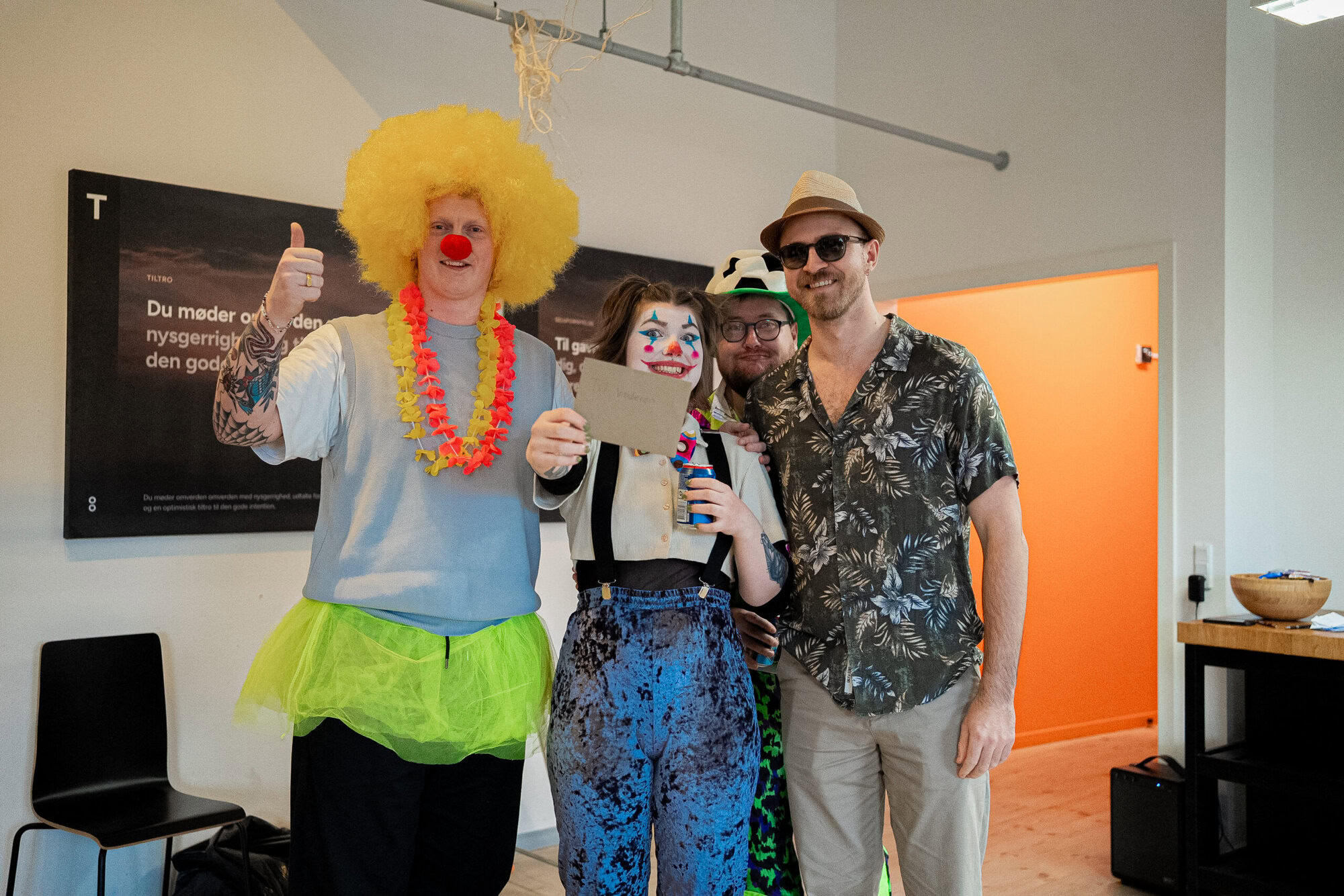
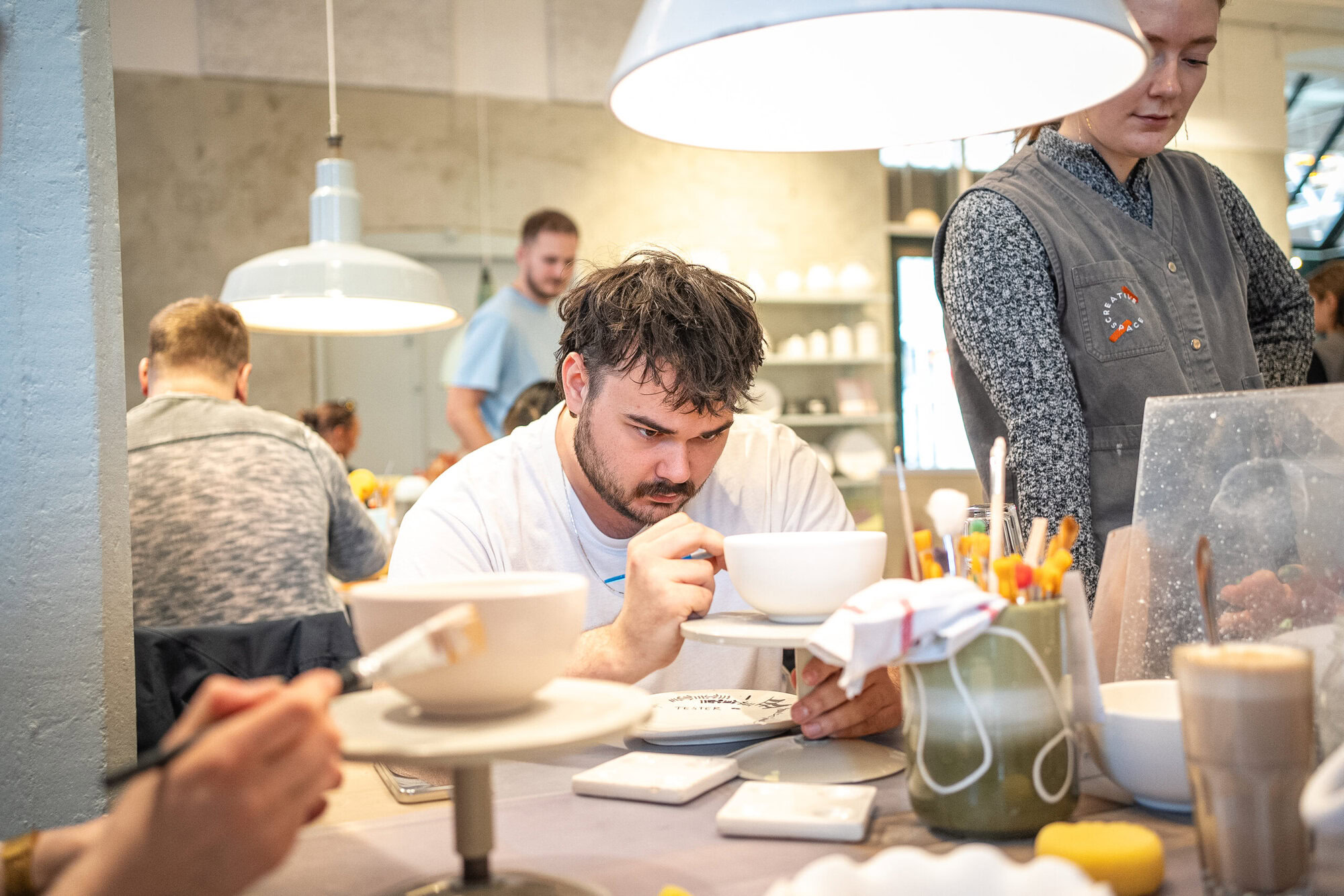
- We have around 10 official employee events a year, where we do everything from a summer house trip, go-karting, and LAN parties to a family day and a creative event (in addition to our extra unofficial Friday bars).
mission
The director at their own desk delivers the extraordinary
By promoting our culture based on self-management and relationships in perfect balance with efficiency and talent development, we create effective business development and extraordinary digital solutions that provide value for our customers.
The tool to reach the goal
The mission below contains the ingredients for how we will achieve our vision of building the good workplaces of the future.
There are many ways to interpret ‘a healthy culture’ or what ‘goodness’ is. So to provide a common ground, we have written our mission as a kind of “recipe” to be followed closely. The mission also tells us which management levers we use and what needs to be in play before we can say that we have succeeded.
🧡 Morningtrain’s mission:
“By promoting our culture based on self-management and relationships in perfect balance with efficiency and talent development, we create effective business development and extraordinary digital solutions that provide value for our customers.”
The order is not random, and all words are carefully chosen. There are clear contrasts built in, which can often seem like “opposites” to each other, but we have included them in our overall mission to give a nuanced picture of what needs to be considered on both sides of a scale in balance.

Culture first
The first part of the mission is about culture, because it is our primary tool. When we want to change something—whether it’s behaviour, finances, or something else entirely—we start with the culture.
Self-management and Relationships
The next part of our mission is about self-management and relationships—and with us, they come with obligations.
When we work with self-management, we call it “being a director at your own desk”.
But we don’t want all our colleagues to be so focused on themselves that they forget about others (the relationships).
Being completely self-driven requires:
- A high level of awareness
- The ability to give feedback
- Knowing your domains and roles
- Taking great responsibility and knowing your responsibilities
Relationships are written into the mission because we must never underestimate how far strong relationships have carried Morningtrain over the years. Therefore, they must not be forgotten when we make decisions.
That we want to focus on relationships answers, for example:
- Whether we should have a phone menu when you call us, or just have a human on the line (duh—phone menus aren’t helpful).
- Whether we prefer physical meetings or virtual meetings.
- Whether we want a remote culture where only a few colleagues come into the office during the week.
- Whether we should do more to pamper existing customers rather than getting new ones.
And the list goes on..
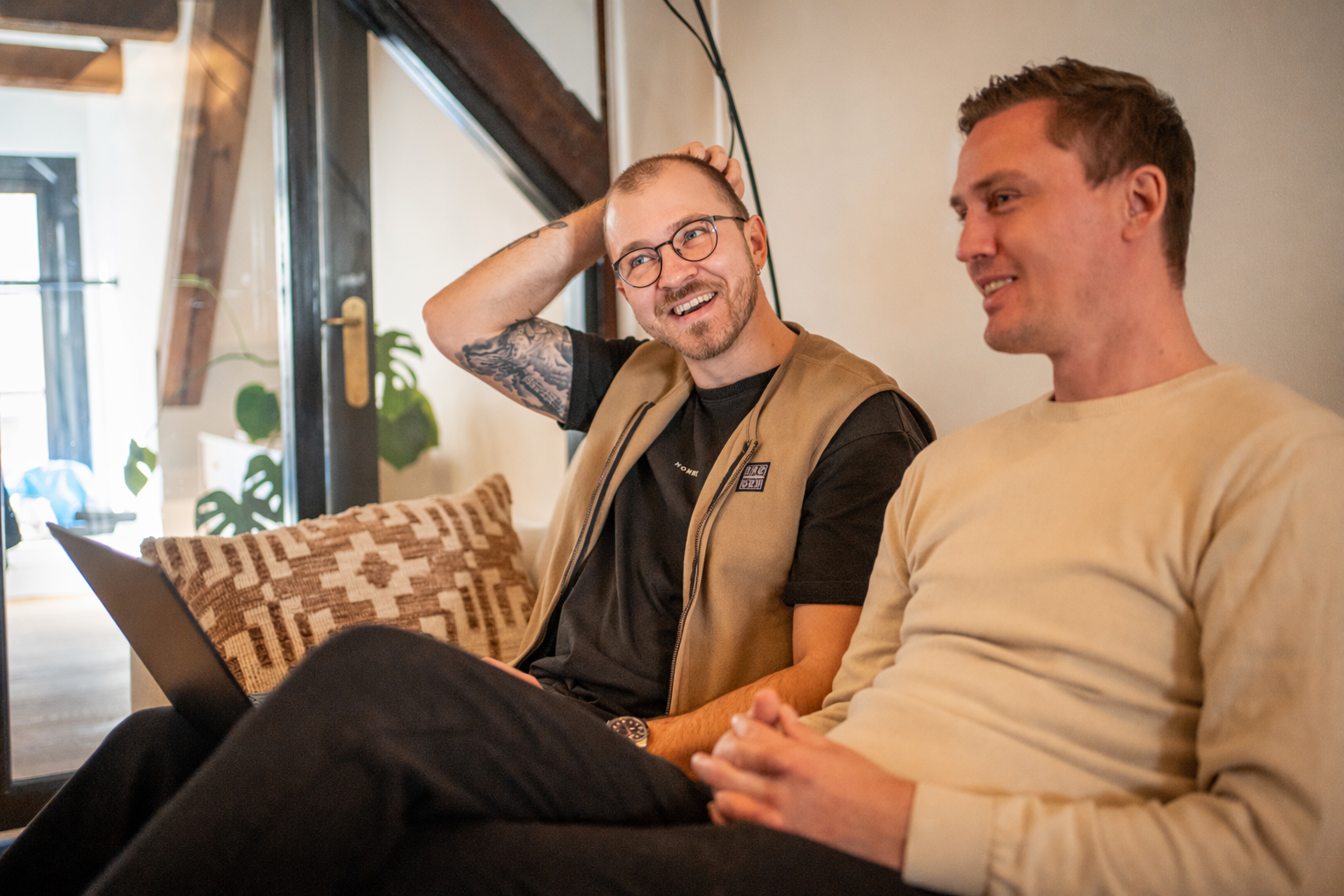
A long-term and sustainable interaction
The sentence “…in perfect balance with efficiency and talent development…” tells us that we of course focus on being efficient, but it’s okay to slack on efficiency in the short term if we need to become smarter or learn something new.
Because talent development must not be forgotten in the eternal pursuit of increased efficiency in the short term. Without both, we do not have a sustainable and self-reinforcing balance in the long term.
“Perfectly balanced, as all things should be”
Thanos the mad titan – Marvel cinematic universe
Our approach and area of work
This interplay above enables us to deliver on the next part of the mission, which is about our focus on business development and on creating extraordinary digital solutions.
And no, it’s not (just) sales talk 😉
The word ‘effective’ speaks to the promise we bring to our tasks. Before you can say whether something was effective or not, you need to know:
- What do you want to move?
- How do you know if it succeeded?
This is a unique approach we use both internally and with our customers. You will always be asked:
“What are we trying to solve, and how do we know we’ve solved it?”
Only with the above mindset can we ensure that the conceived solution solves the right problem and in the right way.
Start with the Customer, then the Numbers in the Excel Sheet Will also Work Out
The mission concludes with our work needing to create value for our customers.
This serves as a reminder of who we are here for. When we create solutions, the success criterion is not to impress an owner group, management, or your colleagues.
It must create value for the customer who pays for the solution—and if you focus exclusively on customer value, it will automatically also create value for Morningtrain.
We think that’s just common sense.
Values
The values function as a “shot caller” when doubt prevails
We chase the ideal, and to help us on that journey, we actively use our values as a guideline to make decisions that bring us closer to the vision together.
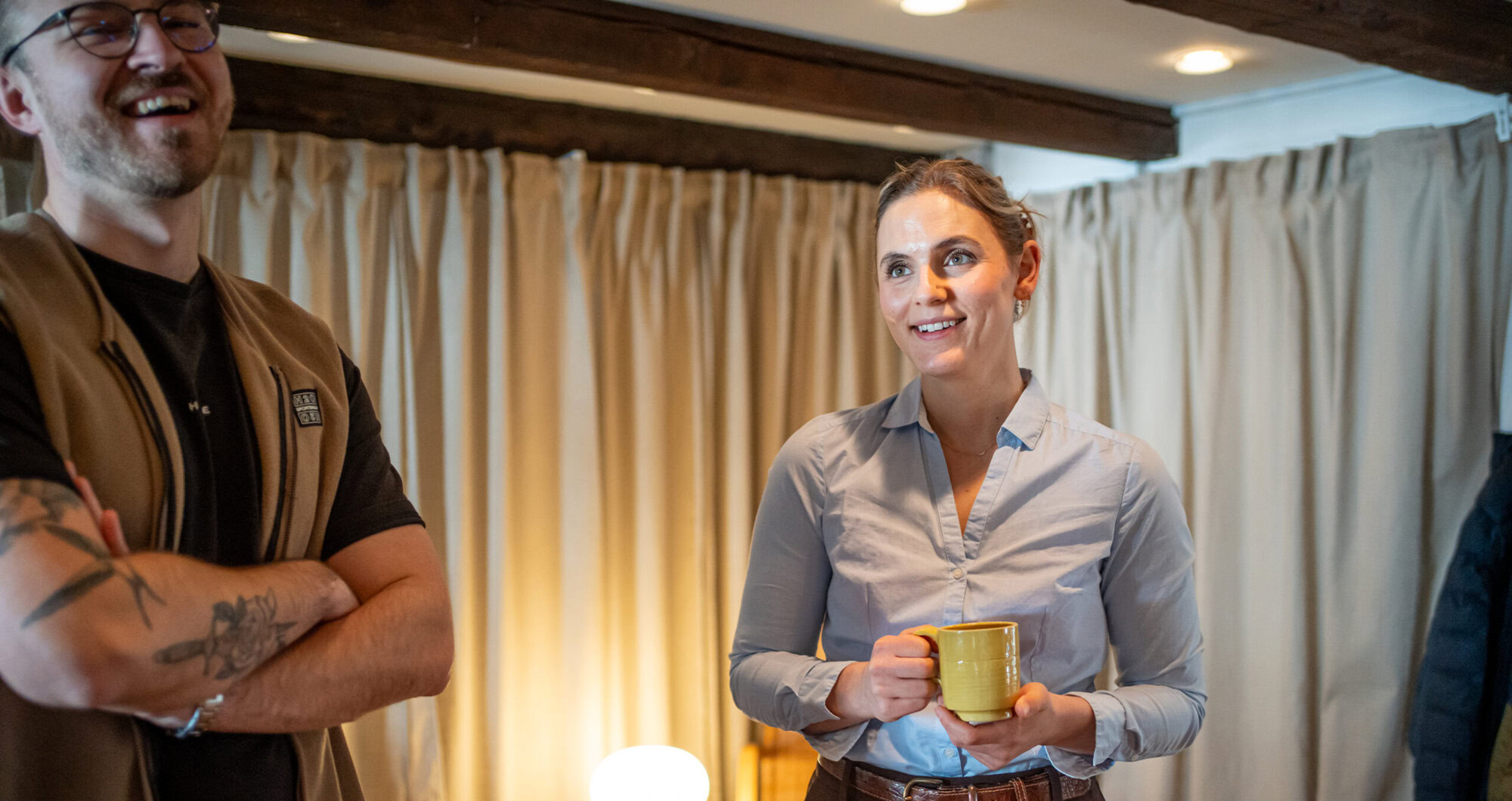
The values are guests in our house
At Morningtrain, we see values as guests in the house. We choose them and invite them in, but they do not necessarily stay forever.
We revisit our values every 4–5 years and test whether it’s still the set of values that best keeps us moving towards our vision.
The point is that as an organisation develops, different focus areas come into play, where new values become more relevant than the current ones. This means that over the years we have continuously shifted focus from some values to others—depending on what the organisation needed.
There will always be more values living in an organization than the few that are selected to be on the wall. The task is managerially to focus on the few that best bring us closer to the vision.
Thomas Østerkjerhuus, CEO, Morningtrain ApS
When a focus value is replaced, it’s not because we shouldn’t live the old value anymore. More often, it’s because the value is already deeply embedded in the backbone of the critical mass, so we no longer need the heightened focus on it—or because the old value is no longer as crucial.


Let us introduce: SATS
Morningtrain’s set of values has been given the cheeky acronym SATS, which makes it a bit easier for all employees to remember the values. It’s a small communication trick: rhymes and jingles are easier to remember.
On top of that, we SATS—bet on—our colleagues and our culture, and we ask people to SATS—bet on—themselves. If we are to succeed together, we must also dare together.
⭐ SATS explained
Collaboration (Samspil): “You know when to play solo or together in sync.”
Accountability (Ansvarlighed): “You take ownership by solving challenges or passing them on effectively.”
Trust: “You meet the world with curiosity and trust in good intentions.”
Self-renewal: “You have a desire to be guided in your development towards becoming the best version of yourself, for the benefit and joy of yourself, your colleagues, and our customers.”
However, it’s quite important to us that our values actually live and are not just on the wall in our canteen. Therefore, we have implemented several initiatives to ensure that our values are understood and lived.
Including:
- Monthly value barometer meetings where different situations are brought up. It might be because something went really well—or maybe completely off track.
Here, the incident is analysed and worked through in plenary by the team involved, focusing on how the values have been in play (or not) in order to create a shared understanding of a shared set of values. - Feedback routine where colleagues give “maintain” or “develop” feedback, following the correct formula so it doesn’t just become information or criticism.
Feedback must be loving, specific, and constructive. In this way, we’ve given all colleagues a tool for genuine and honest communication with each other. Because everyone knows the same format, we require each person to take responsibility for giving feedback to colleagues rather than letting the talk run in the corners. - Luxafor lamps that signal when you don’t want to be disturbed because you’re concentrating or in the middle of a creative process that requires peace and quiet. It’s an important part of good collaboration that we know when we can approach people—and when it’s a disturbance.
- Check-in and check-out routine where, in a meeting, we can “check in” and “check out”. Here we can share what we’re bringing into the meeting and what our expectations are, etc. It builds trust when people know where we’re coming from. At the same time, it’s part of self-renewal that we generally have higher self-awareness about what we bring into the room—and how it can affect the room and the decisions.
- Domains and roles come before titles, which means colleagues have full autonomy within their respective domains. We decided this to increase accountability in the office. Because if colleagues are to take responsibility, they also need to know what they’re responsible for—and they need to be allowed to make decisions autonomously. With our structure, it’s competence, not hierarchy, that dictates decisions.
Our history
To understand who you are, you need to understand where you come from
What started as a failed entrepreneurial adventure ended up leading to the fundamental principles and culture behind the success of Morningtrain.
In 2010, four young entrepreneurs travelled to the USA to build a software platform for radio stations. The project did not succeed, and they returned home with debt—but also with the important realisation that they wanted to continue together. That became Morningtrain.
The direction was shaped by the people and the interplay between them, and the ambition was to create a place where you thrive, develop, and solve tomorrow’s tasks together.
Month after month, and later year after year, Morningtrain gradually grew and began to take shape as a digital agency with expertise in digital customer journeys.
Over time, Morningtrain also became a preferred place for digital specialists who wanted to be part of a strong professional and social community.
And the community is at the core of Morningtrain.
Nurturing the community is synonymous with the desire to cultivate the long term, lasting relationships, strong values, and a healthy culture.
Morningtrain is not here to “beat anyone”. We simply want to still be here in 100 years and stand as a shining example of what can happen when we are together about tomorrow.
Organization
The structure that powers ‘the self-directed colleague’
For us, the organisational structure doesn’t define who’s in charge, but who carries which responsibility. When everyone knows their domain, everyone can own theirs and make decisions within their area, without creating blockades and bureaucracy.

The most skilled person for the job has the domain
We have always had a competence hierarchy, which we have tried to refine the framework for over the years to ensure that the most skilled person in an area also gets a corresponding decision-making mandate.
This doesn’t mean in the traditional sense that the most skilled production employee gets promoted to production manager. Instead, it means that we have defined that leadership comes in many sizes and forms:
- Personnel management
- Leader management
- Professional management
- Business operations
Each of the four above requires different competencies. It also means that we have decentralized leadership by assigning several different roles to “domains”, so more people can carry their part of a total management and decision-making responsibility.
Domains explained
A domain is a described area in a colleague’s role or contract, where one either has a ‘responsibility’ or ‘co-responsibility’.
If you have the responsibility, it means you are responsible for making decisions and ensuring that we move forward within the domain—but you are also responsible for ensuring that the right people are consulted.
Colleagues who are co-responsible for a domain must be consulted when something needs to be decided within the domain.
In this way, we ensure that colleagues who need to lead other colleagues are skilled personnel managers, while technically experienced colleagues make technical decisions, etc.
We must not take the person most skilled at a piece of work and make that person a poor leader for those who now have to do the job.
Peter Thomsen, COO, Morningtrain ApS

The Structure and Domains in Broad Terms
| Group | Reports to | Domains |
|---|---|---|
| The owners | Sets the owner strategy, which defines the vision, mission, values, and financial framework. In addition, major investments are approved by the owner group. Being an owner in Morningtrain ApS has no impact on your employment relationship. This means that the owners’ individual domains depend on their roles in the organisation. | |
| The executive board | The owners | Ensures that an overall direction is set over 1–3 years, which fulfils the owner strategy. The Executive Board’s domains are overall finance, legal, adherence to the vision, and setting the management and their domains. |
| The management | The executive board | Has the overall responsibility for operations in the various departments with an eye on one year at a time. They have full autonomy to run their departments, as long as it aligns with the direction set by the Executive Board. They have personnel responsibility for Heads of, but also specialists and tech leads in situations where there is no Head of in their capacity. |
| Heads of | The management | Has responsibility for a professional area, as well as personnel responsibility for Tech leads and the specialists in this professional area. If there is no Tech lead in the professional area, the Tech lead’s professional responsibility will automatically fall to the Head of role. |
| Tech leads | *Heads of | They are professional beacons, responsible for ensuring that we move forward professionally within their area. They are also responsible for the general quality and level of the solutions we deliver. |
| Specialists | *Heads of | They are responsible for delivering the product or solution that solves the real problem or fulfils the potential that is the goal of an effort. They are responsible for staying professionally updated within their field and continuously putting forward ideas to Tech leads and Heads of, with suggestions for improvements to ways of working. |
Insane—you have now read roughly 3,500 words about our shared love story with Morningtrain, much of which has been us praising ourselves. THANK YOU for reading along.
You deserve some love 🧡🧡🧡