

Digitalization
5. January 2023
How much does a booking system cost?
The short answer is that a booking system can cost anywhere from DKK 10,000 to DKK 1,000,000 (and much more); it simply depends on what your needs and business model require.
The price of a booking system depends entirely on the features the system needs to include. This applies whether you invest in a licence for an existing system or have a system developed from scratch.
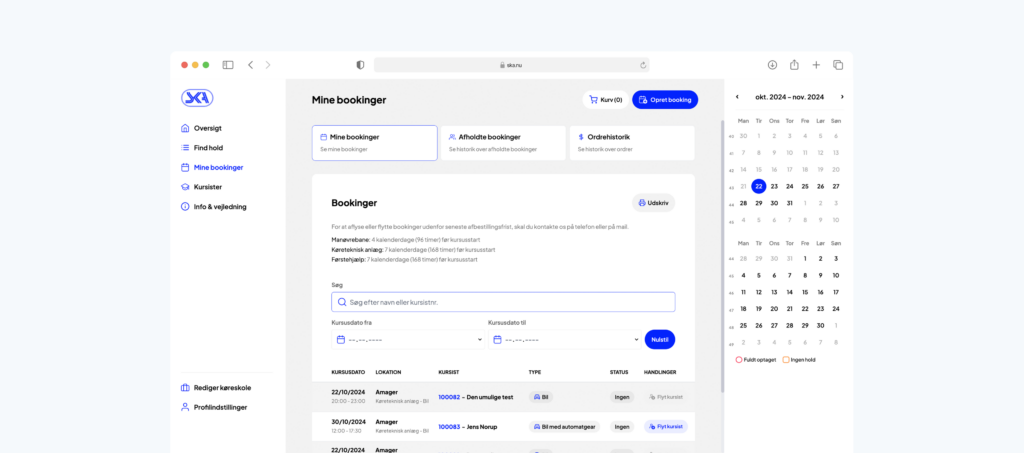
One thing is your one-off implementation costs; another is subscriptions, features, support, and operating costs.
Whether you should pay for an existing system or have your own booking system developed comes down to whether you need a system designed to meet many people’s needs, or whether you have advanced business logic that does not fit into that box.
A booking system can be as simple as a contact form on “steroids”, where your website visitors can make an enquiry without anything actually being booked automatically, and without the system itself cross-referencing, for example, inventory or an external calendar.
So what determines the price?
The answer is fairly straightforward: as mentioned above, it is almost exclusively the complexity and number of features in the system that determine the price.
But what is a feature, then?
For example, it could be:
- A lot of rules (if the user has selected something, then other things should no longer be possible).
- If something needs to be validated especially if it needs to be validated by a third party (the system checks a calendar, a CRM system, or some other third party).
- Third-party integrations, especially integrations with email systems, as this also triggers validation.
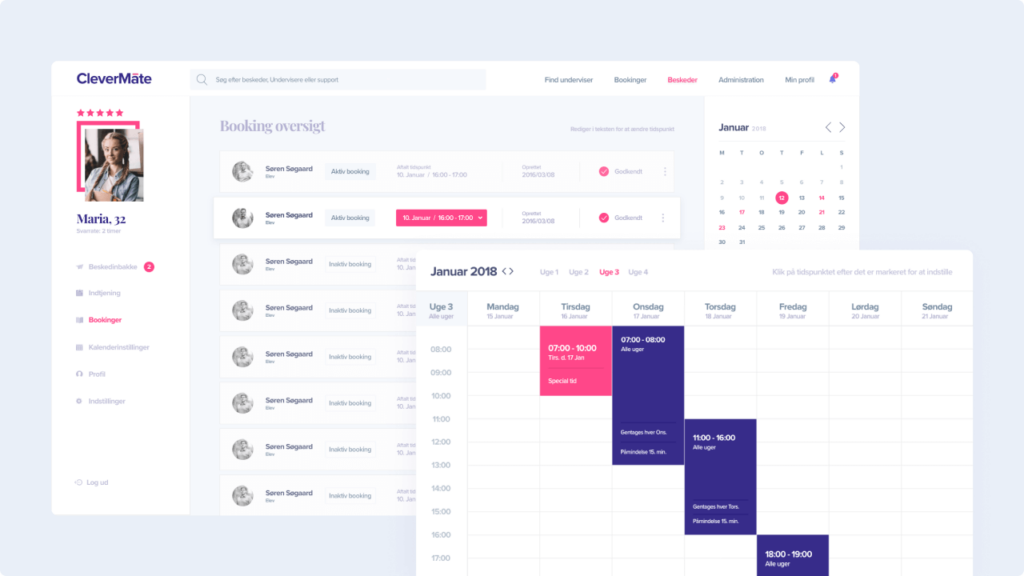
- What you are booking whether it is people’s time or a set of resources. For example, booking a hairdresser vs. booking a training course where the instructor also brings a physics kit.
- Custom design and user journey. If attention to detail is required and the user needs to be guided smoothly through the decision-making process, this will most often be designed uniquely from scratch.
- Add-ons, upselling, and cross-selling in the flow just think of the booking flow when you buy airline tickets.
What should you be aware of?
The most important thing is that you are clear about your and your company’s needs. Also, think a few years ahead so you include any scaling and/or strategic changes.
We have listed 5 things you should cover in your considerations.
1. What pain point do you want to solve?
Why do you even want a booking system? Think it through carefully and try to identify the underlying need that leads to the idea that you should have a booking system.
- Is it to reduce service calls?
- To increase your conversion rate?
- Increase repeat purchases?
- Improve the user experience?
- Streamline your order flow?
- To get your systems to talk to each other?
Or something else entirely…
Being clear about which problem you want to solve gives you a success criterion for choosing an existing solution, or a north star for what to pay attention to while developing a system uniquely for you so you ensure you choose a solution that delivers the most possible value.
2. What actually creates value for you?
Not to be confused with which of the above problems you want solved. You should also map what, in your business, generates the most revenue.
- Is it the number of new customers?
- Is it the average order size?
- The frequency with which a customer buys from you?
- Is it upselling and cross-selling?
- Is it direct contact with customers?
- Etc.
By being clear about where the greatest value is created, you can also choose (or have designed) a system that accommodates exactly that.
This way, you ensure you get a booking system that supports your core business and that the investment creates real value.
3. Is there already an industry-specific system?
Before you either have a system built uniquely for you or go out and almost recklessly choose an existing solution, you should consider investigating whether there are any industry-specific solutions for your niche.
By now, a wide range of industry-specific booking systems have been developed for a host of industries:
- Hotels
- Restaurants
- Hairdressers
- Event companies
- Travel agencies
- And much more!
The advantage of checking these systems out is that they often offer features based on extensive industry knowledge so you get features you may not have considered yourself, which can add a lot of value.
At the very least, industry-specific booking systems can serve as inspiration for what your own system should include.
4. What are the costs of the system?
Yes, it almost goes without saying you need to pay attention to the price… duh!
But what I mean is that you need to pay attention to what type of costs the system comes with.
Some systems are priced based on your size; others are priced based on the features you need. Some systems have high setup costs; others may have no setup costs but instead high subscription or service costs.
It should also be mentioned that if you choose to build a system from scratch, it can often be cheaper to invest a bit more in the initial development of the booking system so the flow logic is carefully thought through from the start, rather than trying to add it later.
5. Can you do it in phases (MVP)?
Last but not least: can you potentially phase your “booking system adventure” so you can get to market quickly, test the solution, and gather user feedback, while also measuring an initial effect of the system before expanding the booking system with more features.
Most solutions are built on assumptions, and we know that, as a rule of thumb, 20% of your features generate 80% of your revenue so get live and find out whether you have identified the most essential functions, instead of trying to map every angle before going to market.
Why is the price difference so large?
It depends entirely on the features you put in the basket when you buy a solution.
If it is a contact form where a user can simply request a date, the solution may cost around DKK 15,000–25,000.
But if the system needs to do things such as integrate with other systems, validate inputs in real time, have a unique user flow, or handle advanced business logic, then the system suddenly costs more we are talking DKK 350,000+.
With booking systems, you are usually paying for features, not the brand so do not worry.
Should you buy an existing solution, or develop your own?
“Could the answer have something to do with features again?” you are probably asking. 😉
DING DING DING DING! I am glad you asked – and you are absolutely right.
I have tried to list the pros and cons of developing your own versus buying an existing solution below:
Advantages of existing solutions:
| Booking system category | Advantages | Cons | |
| Existing solution |
|
| |
| Develop your own |
|
| |