


AI
21. April 2026
New EU rules for AI in marketing: What you need to know now
The EU’s AI rules have already entered into force—and from August 2026 the requirements will tighten significantly. Especially if you use AI for content or customer dialogue. Here is what you need to know, and what you should do now.
Content
New AI requirements AI-generated content must be identifiable Users need to know when interacting with chatbots How should AI content be labeled? What to do now? Do you need sparringDo you use AI in your business? Then new requirements are on the way
The EU AI Act actually entered into force on 1 August 2024, but will be implemented gradually through to 2027. It covers a wide range of areas, from risk management and governance to transparency, but here we focus on the requirements that are most relevant to your use of AI in marketing and communication.
If you, like many other companies, use AI for text, images, video, or chatbots, the requirements for businesses will be tightened significantly towards August 2026.
Learn more below.
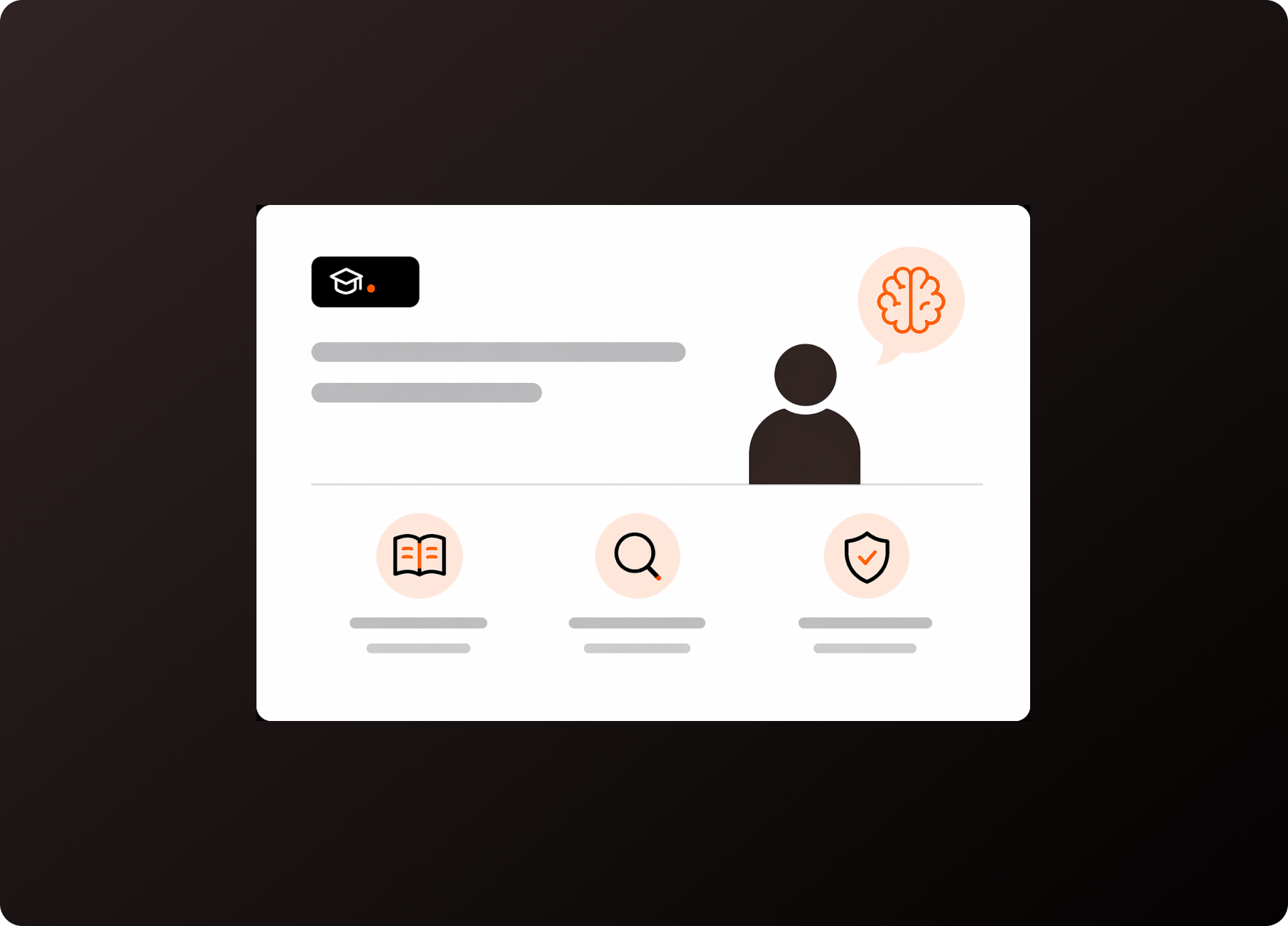
Users must have sufficient AI competencies
The AI Act does not only set requirements for how AI is used—but also for those who use it.
As early as February 2025, it became a requirement that employees have sufficient AI competencies (so-called AI literacy).
In practice, this means that companies must ensure that employees:
- understand how AI is used in their work
- can assess output critically
- and are aware of risks and responsibilities.
AI-generated content must be identifiable
A key part of the new rules is that, in certain cases, AI-generated content must be recognisable as such.
This applies especially when the content could be mistaken for something created by a human.
For example:
- AI-generated images
- AI-generated video or audio
- AI-generated text
- Content that resembles real people or events
If the recipient could be in doubt, it must be possible to identify that AI is involved.
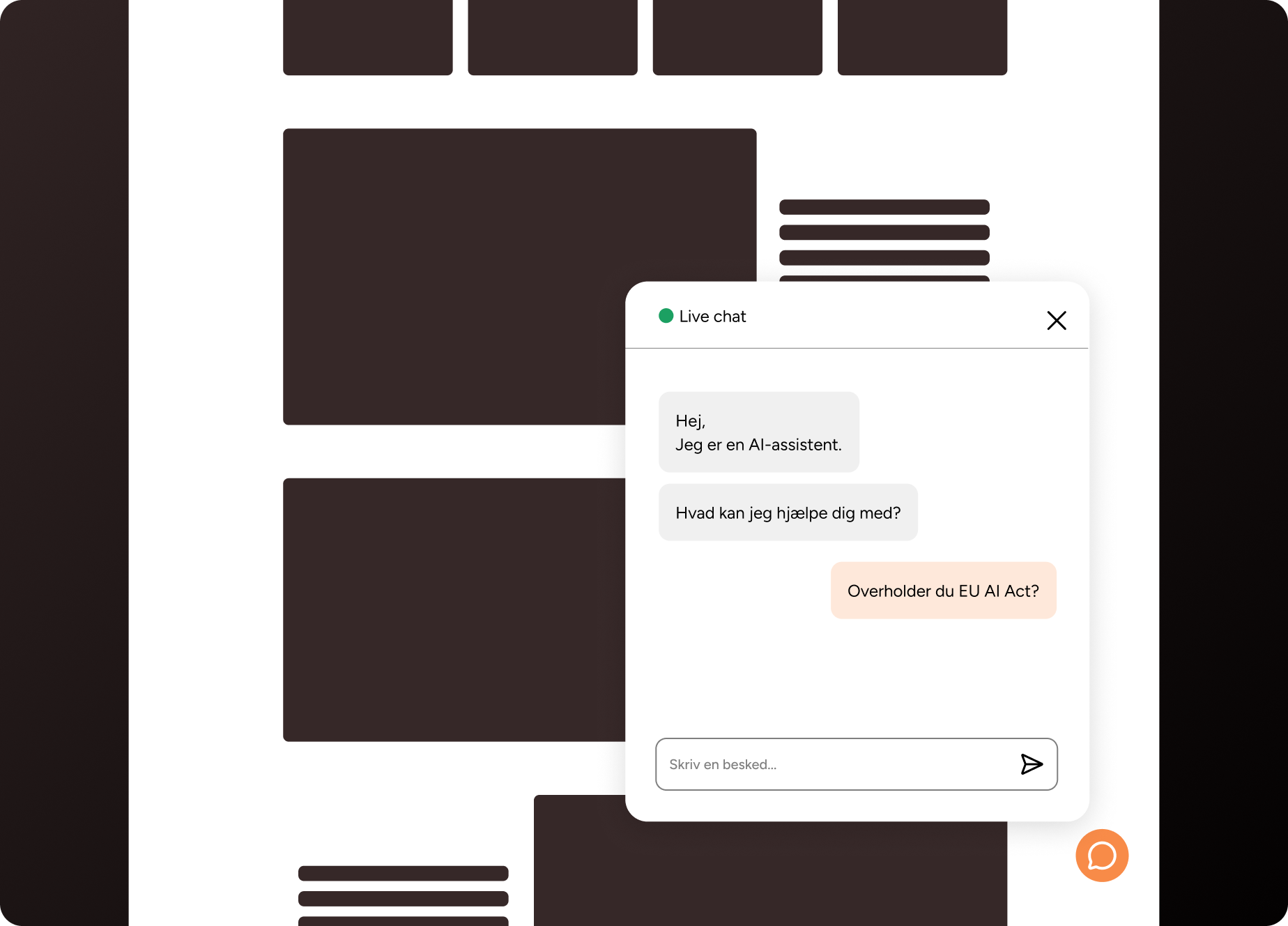
Users must know when they are interacting with an AI chatbot
Transparency does not stop at content.
If a user interacts directly with an AI—for example via a chatbot on your website—it must be clear that it is not a human.
How should AI content be labelled?
A single final standard has not yet been established, but the direction is clear:
AI content must be identifiable—either visually or technically.
This could, for example, be through:
- Visible labels in the content
- Metadata or technical markers
- Digital watermarks
The EU is still working to specify the requirements—among other things through shared guidelines for generative AI.

Note: The labelling above is an example. An official standard for how AI-generated content must be labelled has not yet been established.
What should you do now?
Even though the biggest requirements only apply from August 2026, there is a clear advantage to being ahead of the curve.
Here is a good place to start:
Get an overview of your use of AI
Where do you use AI today, and for what?
Build transparency into your solutions
Is it clear to users when they are interacting with AI?
Think structure before scaling
It is far easier to do it right from the start than to fix it later.
Do you need advice?
The AI Act does not just change the rules; it changes expectations for how companies work with AI.
Those who get it under control early will be in a stronger position—both in terms of compliance and trust.
If you would like to discuss what it means for you, we would be happy to have a no-obligation conversation.

Written by






Do not hesitate – we are always ready for a chat
Should we help you with AI?
We are always happy to have a no-obligation conversation about how AI can create value for your business.