

Lead generation
17. November 2025
Newsjacking SEO: How to leverage news for rapid visibility
When a news story hits your industry, a short window opens where search interest explodes, while competition is still low.If you act quickly, you can achieve rapid visibility, qualified traffic, and a boost to your entire website’s SEO.

Content
Why does newsjacking work Specific example of newsjacking Checklist: How to react in 24 hours Make the impact bigger than one landing page Ideas for news you can useWhy does newsjacking SEO work?
Read why newsjacking SEO works both in the short and the long term.
1. It delivers fast traffic and exposure
Search volume typically explodes when a story breaks. If you manage to respond quickly, you can capture many new visitors within a few days without paid advertising.
The first hours or days after a story breaks give you an advantage, because few cover the topic.
This means you can take ownership of the searches before competitors have time to react.
2. It builds authority and credibility
Google rewards pages that are updated quickly and demonstrate freshness. This strengthens the domain’s overall SEO signal and can improve rankings for related keywords.
At the same time, it strengthens your credibility with users, because you appear as a first mover and a subject-matter authority in your industry.
3. It delivers long-term value
Even if search volume drops again, the page can continue to attract traffic especially if you keep updating it with new knowledge, analyses, and practical advice.
These fast “news pages” act as fresh signals to Google, showing that your website is active, relevant, and trustworthy.
A concrete example of newsjacking SEO
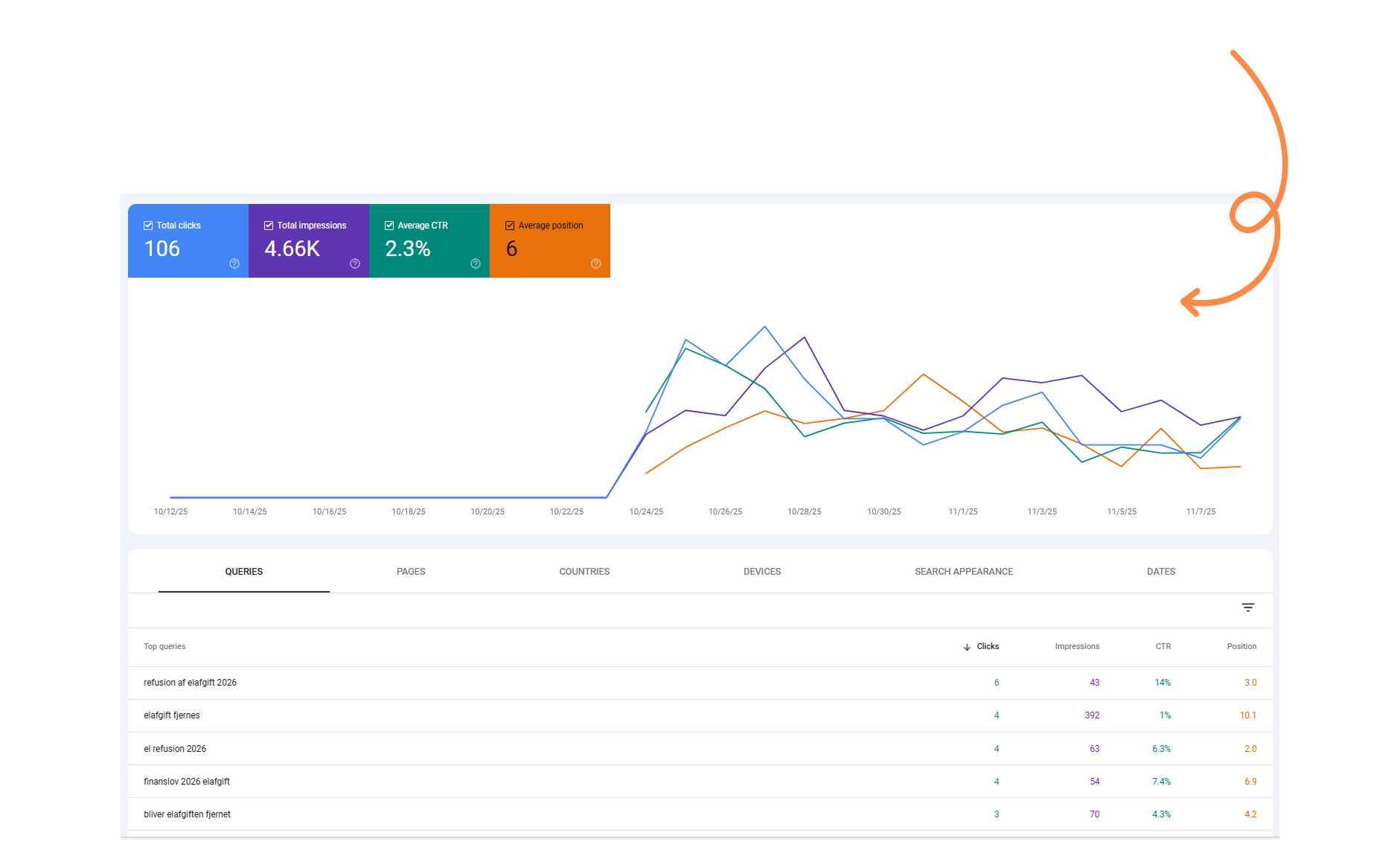
When the government announced that the electricity tax would be removed, the news was particularly relevant for one of our clients. We responded in under 24 hours with a new page explaining the change and what it meant for their target audience.
The result:
- After 1 week: The page ranked on page 1 in Google.
- After 2 weeks: Over 100 organic clicks.
Timing and precise execution can therefore deliver fast SEO results before competitors have time to react.
Checklist: How to respond within 24 hours
- Define search intent: What does the target audience want to know today, tomorrow, and in 14 days?
- Create a page on your website with an explanation and 3–5 questions and answers (remember internal links)
- Publish the page as quickly as possible and add a “last updated” date.
- Share it on LinkedIn and send a short newsletter.
- Update the page again within 2–3 days with new information.
Make the impact bigger than a single landing page
A news story can be the starting point for an entire theme that drives traffic now and over time.
Use the first page as an anchor, then build on it with more formats:
- LinkedIn summary: Share a short version with a link to the theme page.
- Explainer blog post: “What does the change mean for [the target audience] in practice?”
- Guides and checklists: “What should you do over the next 30 days?”
- Glossary/Q&A: Define key concepts from the news this captures long-tail searches.
- Updated product or service pages: Explain how the news affects your solution.
Ideas for news you can leverage
You do not need to wait for a bill. Many types of news can create short-lived search booms that you can respond to:
- Seasonal news: For example, annual deadlines, rules, or trends that return.
- Legislation and grants: Changes to rates, taxes, or new requirements.
- Industry announcements: New standards, partnerships, or certifications.
- Technology launches: Major updates from platforms that affect your industry.
- Pricing and operational changes: From suppliers or partners.