


Lead generation
20. February 2026
Stop selling your product. Sell what the customer gets out of it instead.
Many B2B companies still communicate their products from an inside-out perspective, rather than communicating the outcome the customer achieves with your product or service. This undeniably reduces engagement from the target audience, and your message becomes difficult to decipher.
Content
Introduction Who is this for One product multiple markets Go-to-market questions Better hooks From feature to yieldWhy should this matter to you?
Because we see many marketing managers in B2B companies wasting resources and potential by communicating in terms of products, features, and specifications rather than what the market is asking for “what do I get out of you?”.
You may recognise it. These are companies that communicate heavily in:
- Datasheets.
- Specifications.
- Technical details.
The reality is that, in practice, customers do not buy features.
They buy results and the new, improved position they can achieve or the pain they can remove.
I was inspired to write this post after an interesting client meeting with a classic B2B challenge:
- A strong manufacturing company. One product. Multiple industries.
- And the same mistake I see again and again:
- They communicate the product not the outcome.
It is rarely just a communication problem. It is often a go-to-market problem.
Who is this relevant for?
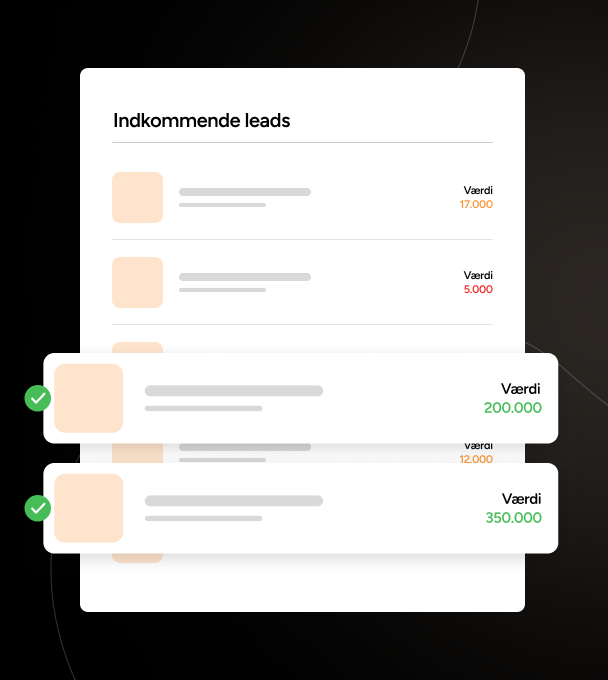
Any sales or marketing manager in B2B companies working to market your product or service, where the value per customer is above DKK 25,000 per unit so it makes sense to invest a bit in acquiring new customers.
When one product has to speak to multiple markets
When the same product is sold into multiple industries, it is rarely the same things that matter.
What changes is:
- What the customer gets out of the solution
- Who needs to make the decision
- What they are most concerned about
Yet you often see the same communication across segments.
Same message. Same sales arguments. Same angle.
This typically reveals one thing:
An unclear target audience.
Because if you speak to everyone in the same way, there is a risk that no one feels spoken to.
Go-to-market is a matter of perspective
When we talk about go-to-market mistakes, it is rarely about the choice of channel or campaign.
It is about perspective.
Many B2B companies think from the inside out:
“Look what we can do.”
“Look how advanced our solution is.”
“Look how many features we have.”
The problem is that the market also thinks from the inside out.
Which means, of course, that they think about themselves first:
“What does it mean for me?”
“Does it help me with my problem?”
“Does it reduce my risk, my time spent, or my costs?”
You should not go to market in a way that suits your organisation.
You should go to market in the way the market needs to be addressed in order to understand you.
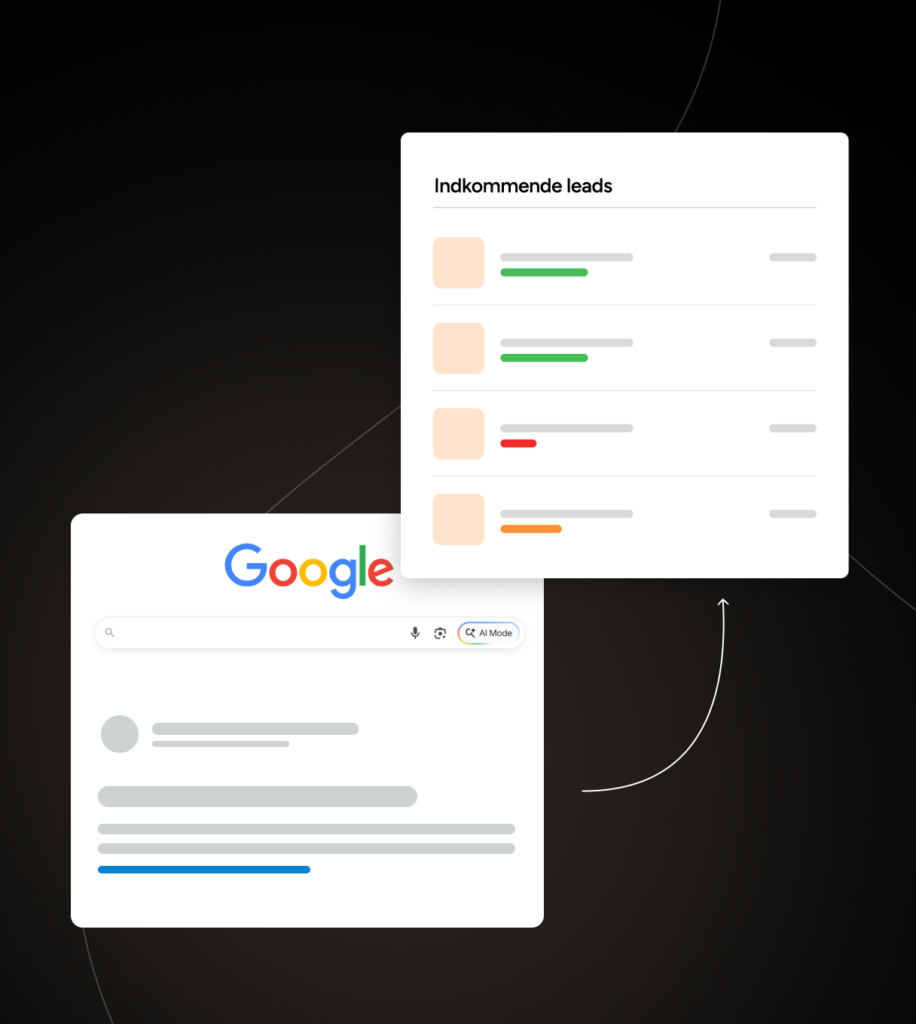
Otherwise, your message becomes technically correct – but commercially irrelevant. And then you can optimise your Google Ads and LinkedIn campaigns as much as you like. But it will not radically change the number of leads your salespeople can work.
Your hook must match the customer’s needs
Many B2B companies use the same hook again and again:
- “Download datasheet.”
- “See technical specifications.”
- “Read about the solution.”
But a datasheet only makes sense if that is what customers are asking for.
The question is not:
What do we want to show?
The question is:
What is the customer’s objection really about?
Do they need to:
- Talk to a specialist?
- See the solution configured for their setup?
- Get an ROI calculation?
- Meet you in person at a trade fair?
- Get documentation of stable operations?
- Know whether it can be implemented without stopping production?
Your hook should not reflect your product.
It should reflect their doubts.
From feature language to outcome language
A classic example from B2B communication might sound like this:
The feature version:
“Our system is based on a modular architecture with high uptime, advanced data logging, and the ability to integrate with existing ERP systems.”
It is technically correct.
But the customer is left with one question:
And what does that mean for me?
The same message translated into outcomes:
The outcome version:
“You get a system that can be adapted to your production without requiring a complete replacement, and that provides documentation of stable operations so you can reduce downtime and make decisions based on data rather than gut feelings.”
Same product.
Same functionality.
But completely different relevance.
One explains what it is.
The other explains why it matters.
Communication is an outcome—not just decoration
In complex B2B markets, positioning is not a creative layer on top of the product.
It is a strategic decision about:
Who do we want to be relevant to and why?
To be able to answer that, you also need to answer questions such as:
- What problem do you want to solve?
- Who do you want to solve it for?
- And how does your product/service solve the target audience’s challenge?
When companies shift focus from features to outcomes, three things typically happen:
- The dialogue improves
- The pipeline becomes more qualified
- Price matters less in the sale
Not because the product has changed.
But because the relevance has become clearer.