


Digitalization
5. November 2025
What is a PIM system?
PIM is an abbreviation for “Product Information Management”, and a PIM system is a central system where the company collects, organises, and maintains all product information. A PIM system is used to have one place where product information is maintained and distributed to other systems from.
Content
What is a PIM system? Who uses it? What is it used for? When should you have it? IntegrationWhat can a PIM system do?
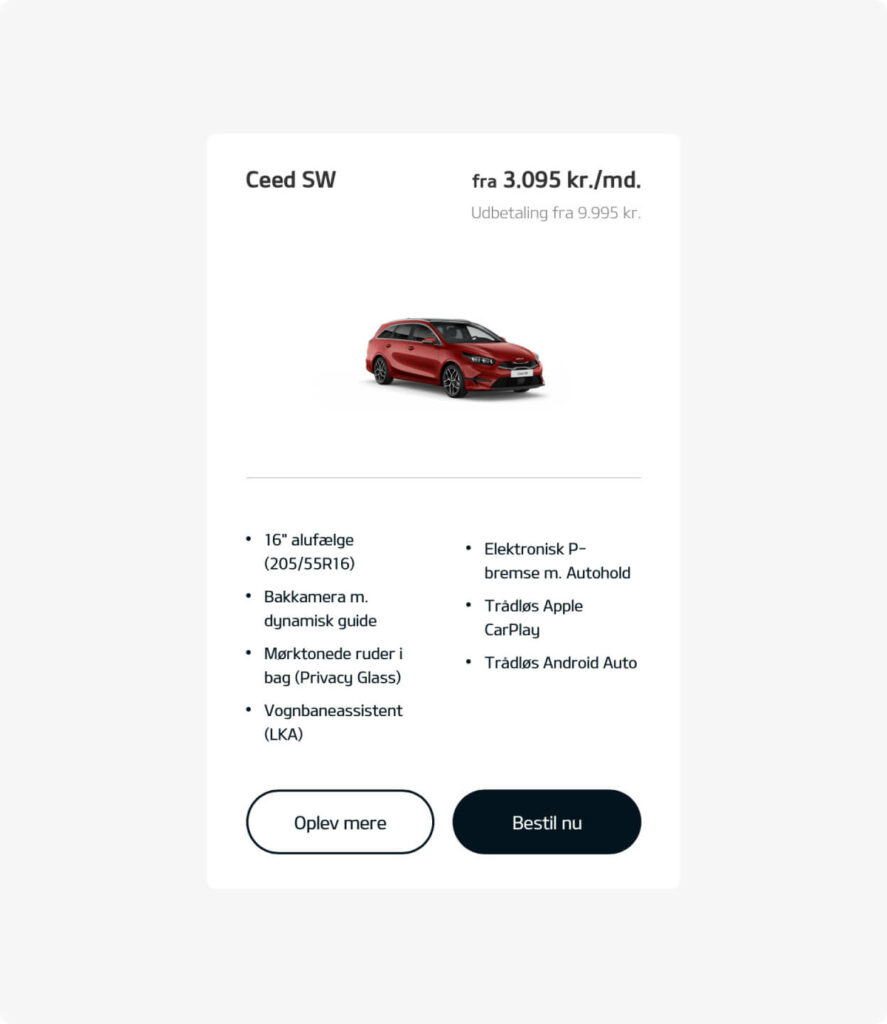
A PIM system is more than just a single product database. It functions as a “single source of truth” for all product data, such as descriptions, technical specifications, images, data sheets, videos, documents, metadata, categories, attributes, versions, and translations.
The idea of having a single source of truth for product data is to minimise errors and marketing debt by having to monitor and maintain large amounts of data in many places.
A PIM system typically includes:
- Importing data from various sources (e.g., suppliers, manufacturers, ERP systems, or CSV/Excel).
- Enrichment and validation of data from other sources (adding images, correct translation, comprehensive descriptions, and quality control)
- Management of processes and roles (who must approve what, which channel and systems require which data, etc.).
- Distribution (export) of data to sales channels, website, webshop, marketplaces, catalogues, print, resellers, native apps, etc.
- Integrations with other systems (ERP, CMS, DAM (digital asset management), CRM, etc.) to ensure synchronisation, reduce errors, and decrease administrative maintenance tasks.
A PIM system is a central hub for product data that ensures data only needs to be managed and maintained in one place, and then distributed to the sales channels.
What is the difference between systems (ERP, PIM, CRM)?
Select a system below and read more about what the different systems are and what they are good for.
PIM
PIM is an abbreviation for ‘Product Information Management’, and as the name indicates, a PIM system is a central system where companies collect, organise, and maintain all product information.
A PIM system is used to have one place where product information is maintained and distributed to other systems such as webshops, apps, catalogues, etc.
Good for:
- Managing product information
- Distributing product information to external systems
- Reducing marketing debt when maintaining product information
ERP
ERP is an abbreviation for ‘Enterprise Resource Planning’ and is a term for software platforms from which you manage and handle key parts of the company’s processes and resources, such as products, finances, and order management.
ERP systems are most often used by companies where data and information must be handled across sales, inventory, purchasing, production, and much more.
Good for:
- Inventory management
- Financial management
- Order management processes
CRM
CRM is an abbreviation for “Customer Relationship Management”. CRM systems are therefore systems from which you manage all information about your customers, such as documents, dialogues, history, and information about the customers.
The purpose of a CRM system is to help companies understand their customers better and improve customer satisfaction, thereby increasing revenue by building a larger and more loyal customer portfolio based on long-term customer relationships.
Good for:
- Collecting customer data
- Systematically working with and managing existing and potential customers
- Increasing sales (share of wallet) to existing customers
Who uses a PIM system
Users of a PIM system, like all software, span different departments and company types. What PIM users have in common is that they have products (it is kind of in the P in PIM 😉). Therefore, it is not relevant for service companies to use a PIM system.
Below you can see our recommendations for when, within a given industry, you should implement a PIM setup:
- E-commerce with many item numbers or product versioning
If you have more than 1,000 item numbers, or if there are many product versions. Combined with having more than 3 sales channels. - B2B companies with a reseller network
If your sales primarily take place through other companies such as distributors, resellers, or external sales agents, it will make it easy to ensure that everyone has the correct and up-to-date information. It also makes you easier to collaborate with for your partners.
- Manufacturers with many product variants
Your products can be assembled or customised in many ways, and depending on how the product is put together, new technical specifications, documentation, guides, translations, etc. will follow.
General use case:
- Heavy marketing and catalogue production pressure (many sales channels)
Regardless of the industry you are in, if your marketing has many moving parts and material is continuously produced digitally—catalogues, printed brochures, trade fair materials, and campaign sites that must be updated quickly and correctly—then a PIM system will be an advantage. - Need for quality assurance, minimising errors, and increased capacity
Whatever the reason, if you can see that it is resource-intensive for you to maintain, update, and use your product data across sales channels, then investing in a PIM system can increase your competitiveness, increase your output, or directly reduce the need to scale up staff.
If you work with many products, many channels, many languages/markets, or complex data, then you are a typical candidate for a PIM. Simple as that.
What can you use a PIM system for
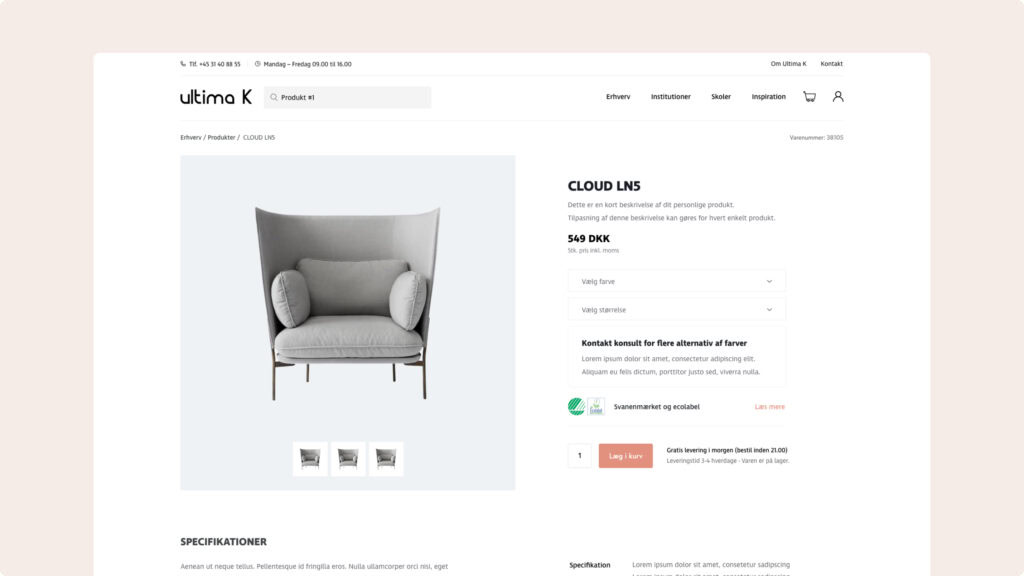
A PIM system provides a number of concrete benefits and use cases, such as:
- Reducing errors and manual processes through better integration with suppliers and partners, where data can be imported or exported automatically in relation to their systems.
- Reducing manual work and Excel sheets, copying between systems, and double entry.
- Faster time-to-market: When new products, translations, or channels need to be launched, the data is already ready and can be distributed with just a few clicks.
- Supporting the omnichannel strategy: Webshop, mobile, catalogues, marketplaces, print—everything is managed from the same platform.
- Improving the customer experience by delivering complete and correct product information, which in turn can reduce returns and customer service enquiries.
At what stage of a company’s maturity should you introduce a PIM?
Below is an overview (table) of the company’s maturity phases, typical characteristics, and when a PIM system starts to become relevant:
| Phase | Characteristics | PIM relevance |
|---|---|---|
| 1. Start-up scale | Few products, one or two channels (e.g., webshop only), few languages/markets. Product data is handled in Excel, or a simple CMS/ERP. | PIM not necessary yet – cost and complexity are too high. |
| 2. Growth phase | More products/variants, more sales channels (webshop + marketplace), need for more languages/markets. More systems and Excel sheets grow. | This is where PIM starts to become relevant. Centralising product data, reducing manual work. |
| 3. Mature/scaling phase | Many SKUs (item numbers), many channels, international markets, complex product data, multiple systems (ERP, CMS, DAM). There are challenges with data quality, versioning, duplicated work, and time consumption. | PIM is necessary to ensure efficient operations, consistent data, and avoid bottlenecks. |
| 4. Enterprise/ multi-brand phase | Multiple brands, many markets, many languages, complex workflows, requirements for automation, integrated product data across the organisation, and partnerships. | PIM is a strategic platform: automation, consolidation, governance. |
What does a PIM system cost?
The costs of a PIM system vary quite a lot, depending on your size, number of products (item numbers), number of channels, level of customisation, and integrations.
Basic PIM solutions can start at a few hundred dollars per month for small businesses or a small number of users.
Note: For mid-sized to larger companies, a PIM system typically costs DKK 200,000–400,000 per year for licence + operations for a standard PIM.
For enterprise level with many item numbers, complex workflows, many users, and integrations: prices may be higher both for licensing, implementation, customisation, and ongoing operations.
Factors that affect the price: number of item numbers, number of users, complexity of integrations, customisation, hosting (cloud vs on-premise), support, upgrades.
Therefore, in your budgeting phase you should include both implementation costs (analysis, implementation, data migration) and ongoing costs (licence, hosting, support, maintenance).
What should a PIM system be integrated with?
An effective PIM system does not stand alone it must be integrated with key systems in the company, including:
- ERP system (Enterprise Resource Planning): This is where product and logistics information typically resides, such as item numbers, stock status, price, and production info. PIM retrieves and/or sends data to the ERP.
- CMS (Content Management System) or webshop platform: To distribute product data to web, mobile, marketplaces, and catalogues. PIM sends data to the CMS or webshop.
- DAM system (Digital Asset Management): If images, videos, documents, and graphics must be managed in parallel with product data. PIM and DAM often work together.
- Marketplaces, distributors, resellers: If product data needs to be shared externally (feed to Amazon, eBay, partner portals) the PIM system should be able to export to these channels.
Integrations mean you avoid double entry, reduce errors, and enable efficient movement of data between systems.