

Lead generation
25. February 2022
What is retargeting?
The term “retargeting” refers to the type of marketing where, for example, companies target their advertising at people who have already interacted with them online.
Content
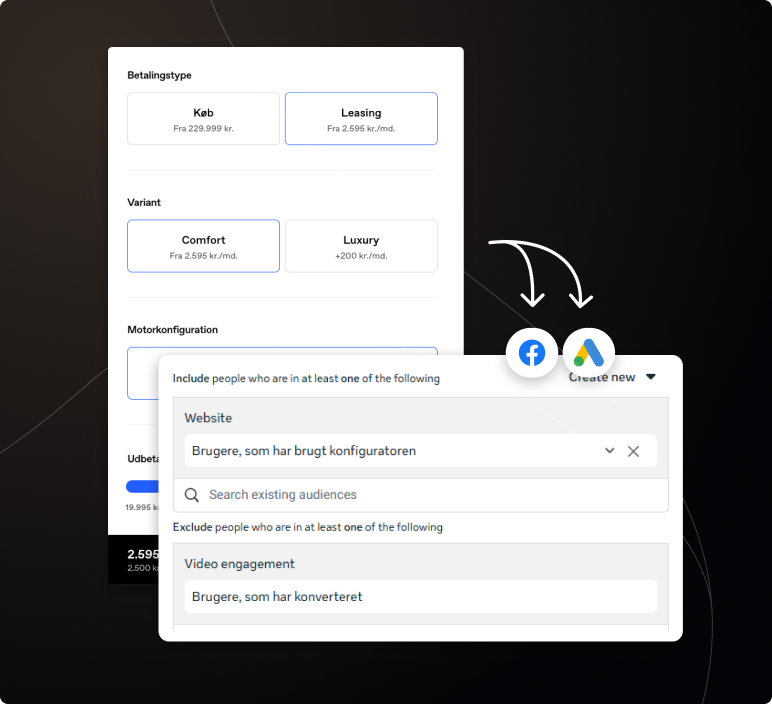
The concept Why use it The decision making process Facebook retargeting iOS14 The consequenceFor example, you can choose to target people who already follow you on social media, who have previously visited your website, who have previously taken a specific action on the website, and much more.
You may also have heard of remarketing, but that is the term used when it takes place on Google’s platforms. When we talk about retargeting, we are referring to advertising on social media.
Why use retargeting on social media?
The biggest advantage of using SoMe retargeting is that you know your target audience has previously shown interest in you/your product. As a result, they will often be further along in the decision-making process than those you reach outside of SoMe retargeting.
In addition, you can use your knowledge of the customer’s previous behaviour to your advantage. For example, you can target people who have downloaded a brochure about a specific service from your website without converting. You can then target these people with ads for that exact service to nurture them further towards making the purchase.
Meet your customers where they are in the decision-making process
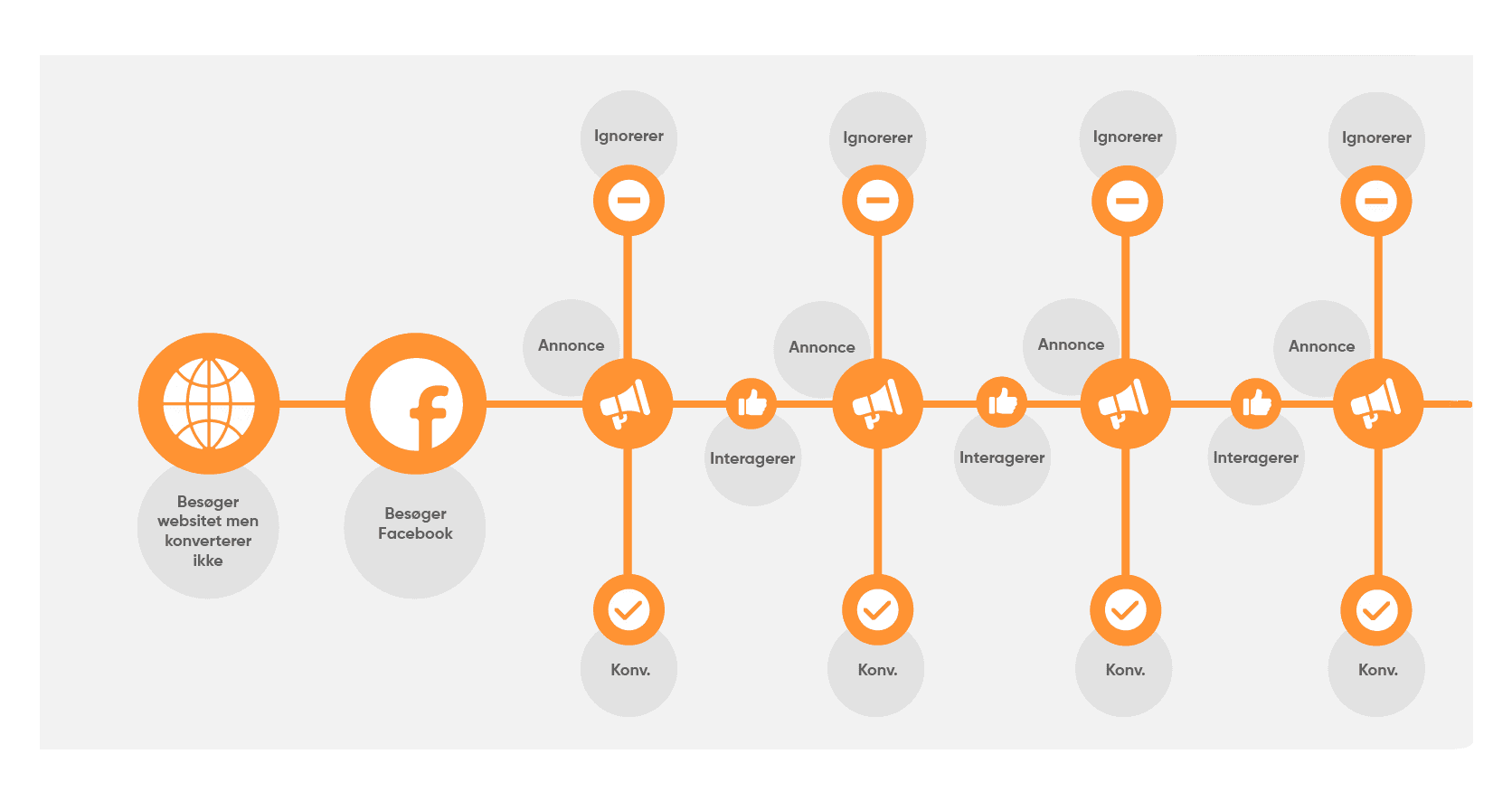
Building on the above, you can also create a dedicated remarketing flow where you decide what people see at different stages of the decision-making process. Here, the first ads can be softer and gradually lead to conversion in the end.
Imagine, for example, a conversion campaign where you target everyone who has visited the website in the last 7 days. These people might be shown videos of your products/services—perhaps even of the specific products/services they previously looked at on the website. Over the next 8–14 days, they might be shown a discount code if price is the reason they have not yet converted. Finally, on days 15–21, you try to get them to buy from you with a “buy now” button on the ad.
There is a difference in how long the time intervals should be, and whether a remarketing flow is beneficial at all, depending on which product/service you sell. Feel free to base it on the typical customer journey and the length of the decision-making process.
How do you get started with Facebook retargeting?
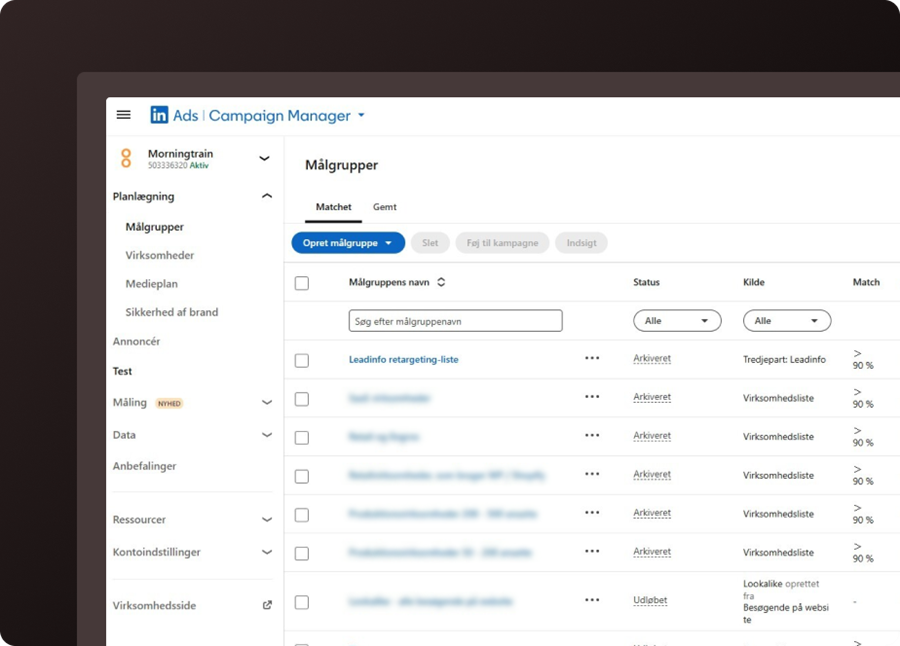
If you want to get started with retargeting in Facebook Ads Manager, you must first ensure that you have a Facebook pixel on your website that can track customers’ online behaviour. Then you need to set up your retargeting audiences, such as “visited the website in the last 7 days” or “current likes and followers on Facebook”. Once you have created them, you can use them in your ad sets.
In addition, you can create copies of your retargeting audiences—so-called lookalikes, or copy audiences. This allows you to target your ads to the 1–2–3 etc. % of the population that most closely resembles your retargeting audience. This is smart because it enables you to reach people who resemble others who have previously shown interest in your products/services.
What impact does iOS14 have on retargeting on Facebook?
Since retargeting on Facebook, as mentioned, requires that you have set up a Facebook pixel to track people’s online behaviour, the iOS14 update has had a major impact on the use of retargeting.
Note
Probably the biggest change after iOS14 is that iOS users must now actively opt in to tracking in the app rather than opt out of it—and people simply do not do that. As a result, you lose the ability to measure and run retargeting for 50–60% of your website visitors.
This means it is no longer possible to track them outside, for example, the Facebook/Instagram app. So if a person clicks a link on Facebook and leaves the app, you can no longer track that the person visited the page via the link.
However, that does not mean we can no longer use retargeting ads on Facebook, but the audiences have simply become half the size because they no longer include all iOS users. Therefore, it is—as it always is—important to continuously monitor how your ad sets are performing, and if it does not work at all, you must reconsider your retargeting ad sets.
What can you do to reduce the effect of iOS14 on your retargeting ads on Facebook?
Fortunately, there are some things you can do to reduce the effect of iOS14 on your retargeting ad sets on Facebook. For example, you can choose to focus on events that happen within the app itself. This could be targeting your ads to people who have watched X % of your videos on Facebook, have interacted with your page, and similar.
Finally, you can consider putting more effort into lead generation earlier in the process. For example, you can focus on collecting newsletter sign-ups, because once you have them, they cannot be taken away from you—regardless of any updates that may come in the future.