

Lead generation
21. January 2021
What does SoMe mean?
SoMe is a contraction of “Social Media”, but it is often used as an abbreviation for social media marketing. A social medium is a platform where users create the content themselves and can interact with one another. This is where the word “social” in Social Media comes from.
Examples of social media include:
All platforms offer their users something unique, whether it is the way they interact with one another or the type of content they can post.
What all social media have in common is that users document parts of their lives there. In doing so, they provide the platform with private information, giving the platform access to understand its users in a completely unique way.
It is this access to user data that has made SoMe marketing so popular. It allows you to advertise on platforms where users have provided all the information about themselves that you can use for targeted marketing. Examples of useful information for your marketing may include whether the person has children, marital status, employment, interests, and similar.
But which social media should you focus on? The savvy marketing professional selects a few SoMe channels and focuses on succeeding on these rather than taking a half-hearted approach across many. These channels are selected based on the purpose of the marketing and the target audience you want to reach.
Note: The results above are an average that we found by analysing across customers, markets, and industries. Every case is different, and the numbers will be too.
What SoMe means for your business
Depending on what your company does, SoMe should play a larger or smaller role in your marketing mix. In B2B contexts, you should consider including SoMe in your branding efforts as well as employer branding—that is, positioning your company to potential talent. In addition, B2B companies can also gain a lot from advertising, especially on LinkedIn.
In B2C contexts, SoMe is more about being present on the platforms your customers use. This means you need a fairly good understanding of who your target audience is, so you ensure you are present on the platforms your audience uses.
Whether you are B2B or B2C, SoMe marketing is about reaching your target audience on the channels where they are present.
If you have a product that is not well known, or if you solve a known challenge in a completely new way, it is precisely about “pushing” your message directly out to your target audience—you cannot wait for them to search for you via search engines.
Social media can be used effectively for four things:
- Increase brand awareness—that is, get more people talking about your brand name.
- Generate leads—the most common social media platforms offer strong opportunities to generate leads.
- Employer branding—social media is a powerful tool for attracting talent.
- Drive sales—especially Facebook and Instagram can drive sales to your webshop using, for example, dynamic product ads.
SoMe as a lead channel
Whether social media can be used to generate leads depends on what you can offer your target audience.
To obtain a lead—that is, gain access to information that enables you to contact people, or alternatively gives you the ability to target them with your marketing afterwards—you should offer your target audience something of free value that they can access in “exchange” for their contact details.
SoMe channels can generate both Marketing Qualified Leads (MQL) and Sales Qualified Leads (SQL); what matters is that the target audience and the message match.
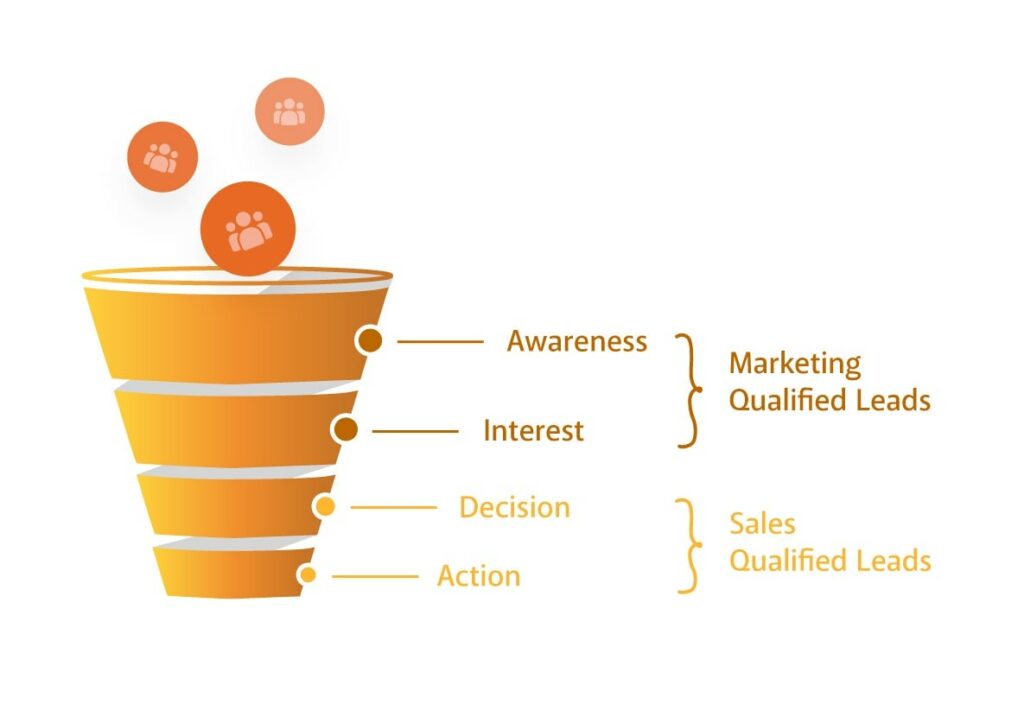
Common strategies for acquiring MQLs and SQLs, respectively:
MQL:
- Newsletter subscription
- Download of whitepapers
- Download of an e-book
- Participation in a webinar
- The person has watched x% of some video content
SQL:
- Phone calls
- Contact form submissions
- Sales emails
- Demo booking
- Free analysis or assessment requested
The importance of SoMe in the future
If I look into the crystal ball, I predict that SoMe will continue to grow. What? Big surprise 😉
Note, however, that I am not talking about existing platforms growing. Social media came to Denmark in the 2000s, and in the nearly 20 years since then, many new ones have emerged, and the target audiences on the different platforms have changed several times.
When Facebook launched, it was for young students—now the majority of active users are Generation X. Instagram was where all the young people fled when all the parents joined Facebook. Now Instagram is mainly used by Millennials—and although we often think of Millennials as young, they are people aged 25–40 😊
So, to make a long story short, I predict:
- The user segment on each channel will constantly change
- More platforms will emerge
- Some platforms will die—does anyone remember DKBN, Arto, MySpace, Friendster? No? Just because a platform is big today does not mean it will be big “tomorrow”.
The savvy marketing professional selects a few SoMe channels and focuses on succeeding on these rather than taking a half-hearted approach across many. These channels are selected based on the purpose of the marketing and the target audience you want to reach.