


AI
20. March 2026
Branding will become crucial for SEO in the future
Google’s new Personal Intelligence is changing the rules of the game for who becomes visible in search. If you still treat branding and SEO as two separate disciplines, you risk losing ground.
Content
What is it When does this happen Why this change The effect of this New ranking factor Adapt your strategy Relations over keywordsThroughout 2026, Google has launched and expanded a feature called “Personal Intelligence.” It connects the user’s Google apps and uses personal data to deliver tailored search results.
It might sound like a technical detail. It isn’t.
For anyone working with search visibility, it is one of the most important changes in years. And it fundamentally changes the relationship between branding and SEO.
Content in this article
- What is Personal Intelligence
- From launch to full rollout in two months
- Why is Google moving in this direction?
- What does this mean for SEO
- Branding has become a ranking factor
- How to adapt your strategy
- It is no longer about keywords. It is about relations.
What is Personal Intelligence?
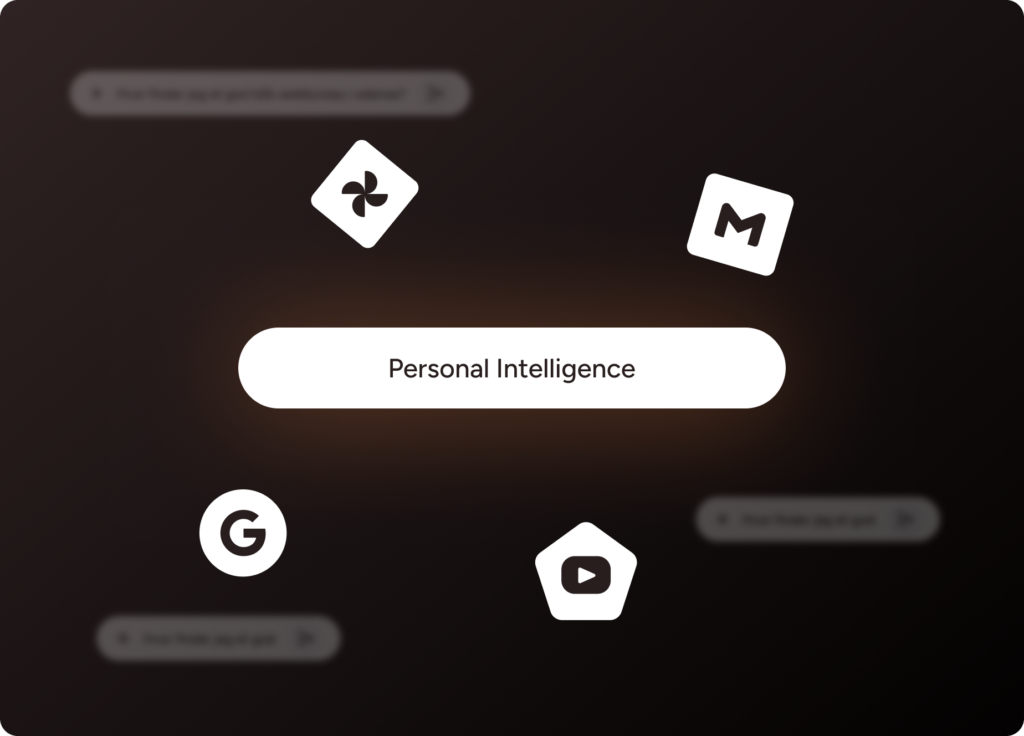
Personal Intelligence allows Google to draw on a user’s emails, photos, purchase history, and calendar appointments. Instead of showing the same results to everyone, Google tailors search to the individual.
In practice, this means that two people searching for the same thing can receive very different recommendations. Google’s own VP of Product, Robby Stein, shared in January that he was recommended a pair of sneakers based on a brand he had recently purchased. Not because he searched for the brand, but because Google’s AI knew he prefers it.
It is no longer a generic search engine. It is a personal assistant that knows the user.
From launch to widespread rollout in two months
Google announced Personal Intelligence in January 2026 as a Labs feature for paying AI Pro and Ultra subscribers. At that time, users could manually connect Gmail and Google Photos to AI Mode in Search.
By March 2026, Google had significantly expanded the feature. Personal Intelligence was rolled out to free users in the US and extended to both the Gemini app and Gemini in Chrome. Google’s messaging was clear: users are demanding personalized answers and are asking new types of questions they would never have asked before.
That pace says something about how aggressively Google is investing in personalization. This is not an experiment. It is a direction.
Why is Google taking this direction?
It is worth pausing to ask: Why is Google investing so heavily in personalization right now?
The answer is commercial.
Google’s business model depends on keeping users within its ecosystem. The more relevant search feels, the longer users stay. The longer users stay, the more ads Google can sell. Personalization is not a service. It is a competitive strategy against ChatGPT, Perplexity, and other AI tools that pull users away from Google’s search box.
Google’s major advantage in this competition is data. No other AI platform has access to a user’s Gmail, Google Photos, Google Maps, YouTube history, and Chrome browsing all at once. Personal Intelligence is Google’s way of leveraging that advantage and making the search experience so personal that users have no reason to switch.

But there is also a broader pattern at play. Over the past year, Google has moved significantly toward viewing the user’s entire digital behavior as one unified picture. A clear sign of this is that social media is now starting to appear in Google Search Console. This is not a coincidence.
When Google begins surfacing data from social platforms in Search Console, it signals that search and social media are no longer separate channels in Google’s view. They are data points within the same whole. Google wants to understand the user’s full digital journey, and social media is an important part of that journey.
For you as a marketing manager, this means that your presence on social media may increasingly influence your search visibility more directly than before. It is another reason why branding, SEO, and social media cannot exist in silos. Google sees them as one picture. And so should you.
What does this mean for SEO?
For decades, SEO has been about ranking high on a shared results page. Everyone largely saw the same results when searching for the same thing. That model is changing.
When Google personalizes results based on the user’s entire digital life, it becomes much harder to predict what a given user actually sees when they search. This makes traditional keyword ranking less predictable.
That does not mean technical SEO has become irrelevant. Structured data, fast-loading pages, and high-quality content are still the foundation. But a new layer has been added: personalization. And that layer favors brands the user already knows and interacts with.
Think about it: If Google draws on purchase receipts from Gmail and browsing history from Chrome, then brands a user has already chosen gain a natural advantage in future recommendations.
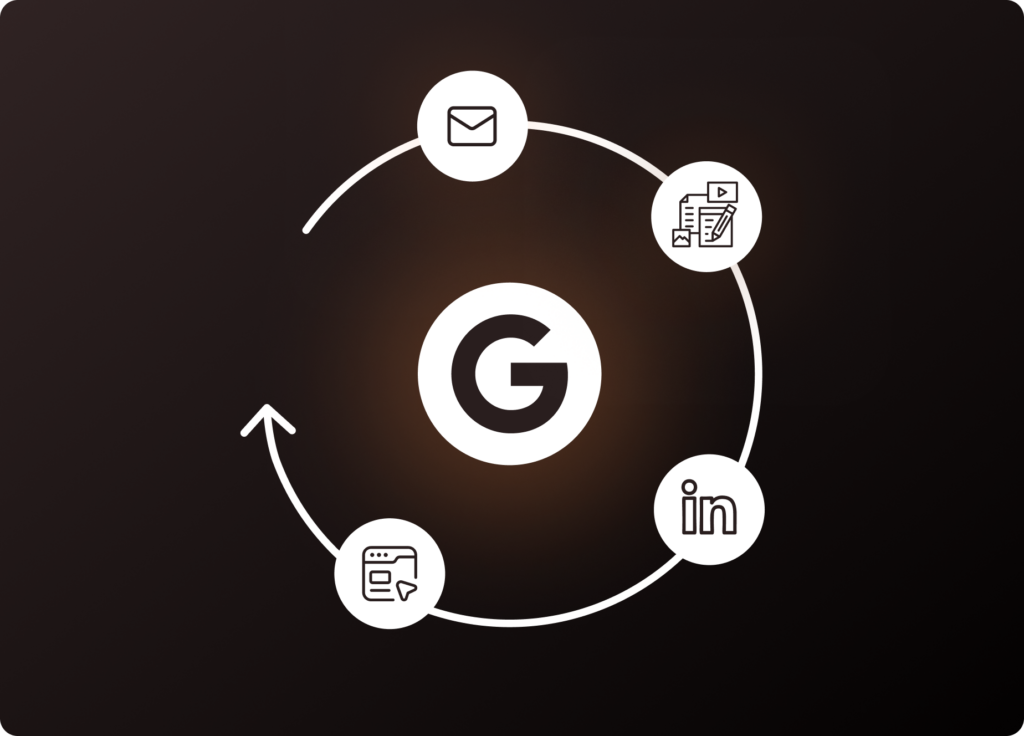
A self-reinforcing cycle emerges where well-known brands become more visible, while unknown brands have to work harder just to enter the user’s ecosystem.
Branding is a ranking factor
Branding has traditionally been seen as a “top of funnel” activity—something you invest in to build awareness, while SEO handles the actual traffic and conversions further down the funnel. The two disciplines have often lived in separate departments with different KPIs.
That is a simplification that no longer holds.
With Personal Intelligence, branding becomes a direct driver of search visibility. If a user prefers your brand, buys your products, and receives your emails, Google’s AI is more likely to recommend you in future searches. Branding therefore does not just affect whether people know you. It affects whether they even see you in search results.
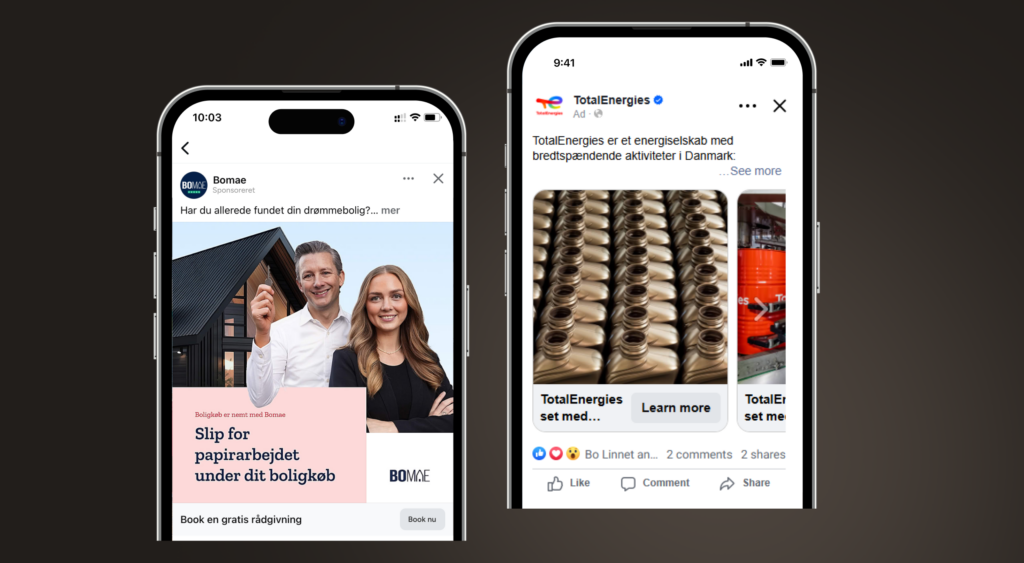
This creates a new dynamic. A strong brand that generates loyalty and repeated interactions gains a concrete advantage in search. A weak brand that has primarily relied on generic organic traffic risks losing visibility as results become more personalized.
How to adapt your strategy
What should you do in practice?
First of all, you should stop thinking of branding and SEO as separate disciplines. They need to work together under a unified strategy.
Here is our 4-step model 👇
1) Be present in Google’s ecosystem:
Your brand needs to be visible in the channels Google draws data from. It means:
- Google Merchant Center
- Gmail via newsletters and order confirmations
- Google Maps
- YouTube
- Chrome
The more touchpoints you have, the higher the likelihood of becoming part of the user’s personal profile.
2) Invest in brand preference and customer loyalty:
Loyal customers who make repeat purchases leave a digital footprint that Google’s AI uses to recommend you again. This is where the value of owning the relationship with your customers truly shows itself—not in the number of followers, but in repeated choices.
3) Use first-party data as a strategic asset:
- Email lists
- Newsletters
- Loyalty programs
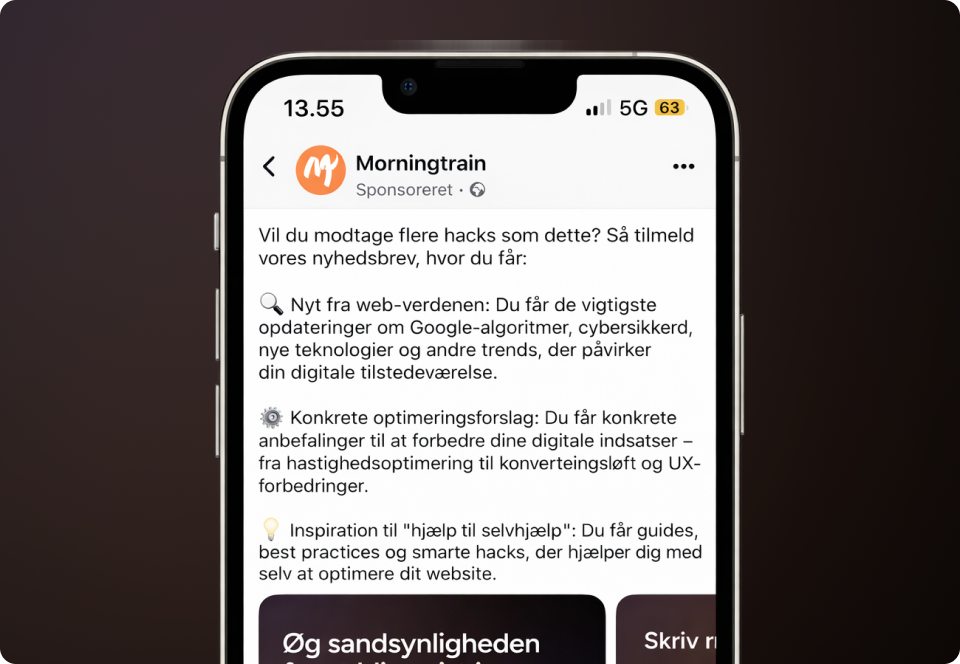
All of these create exactly the datapoints that Personal Intelligence is built on. When a decision-maker receives your emails, you are not just using a direct channel. You are also sending a signal to Google’s AI that your brand is relevant to that person.
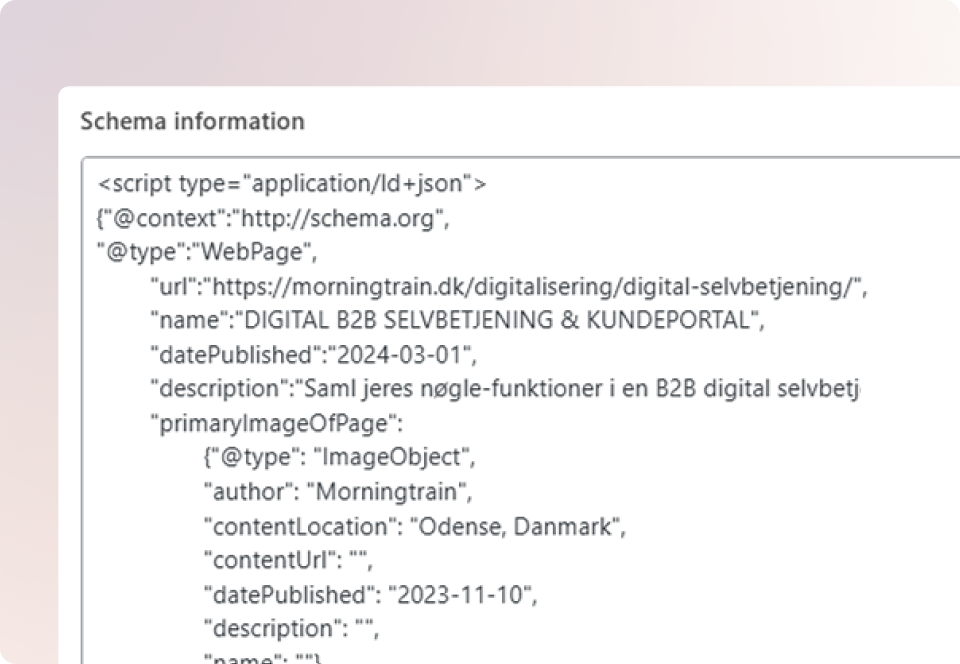
4) Prioritize structured data and product feeds:
When Google’s AI matches a user’s preferences with relevant products, rich, structured information is essential. Make sure your products and services are properly marked up so they can be included in personalized recommendations.
It is no longer about keywords. It is about relationships.
Google’s Personal Intelligence is not just a feature update. It is a signal of where search is heading.
We are moving away from a world where everyone sees the same ten blue links, and toward a world where every search result is unique to the individual user. In that world, it is not enough to optimize for keywords. You need to optimize for relationships.
You need to be the brand people choose, remember, and return to. Because in the search landscape of the future, it is not enough to be relevant to a keyword. You need to be relevant to a person.
The question is no longer whether branding and SEO should work together. The question is how quickly you can make it happen.