


Content
26. November 2020
Content marketing: Use images and video to engage with your visitors
Images and video are a really great form of content when you are optimizing your website, including with a focus on search engines, and are just one part of content marketing. Your visitors love it, search engines love it, it is easier to get people to link to your page, etc.

Think in terms of varied content
Text is not the only type of content that can engage visitors and please Google (and other search engines). There are other strong elements that can help your website achieve good rankings.
There are therefore many advantages to working with these types of media, and search engines also view a page with mixed media types as a stronger and more relevant page.
What purposes can images and video serve?
There can be different purposes for adding images and video to the website. Regardless of the purpose, there is no doubt that it will significantly strengthen your website.
Some of the purposes can be:
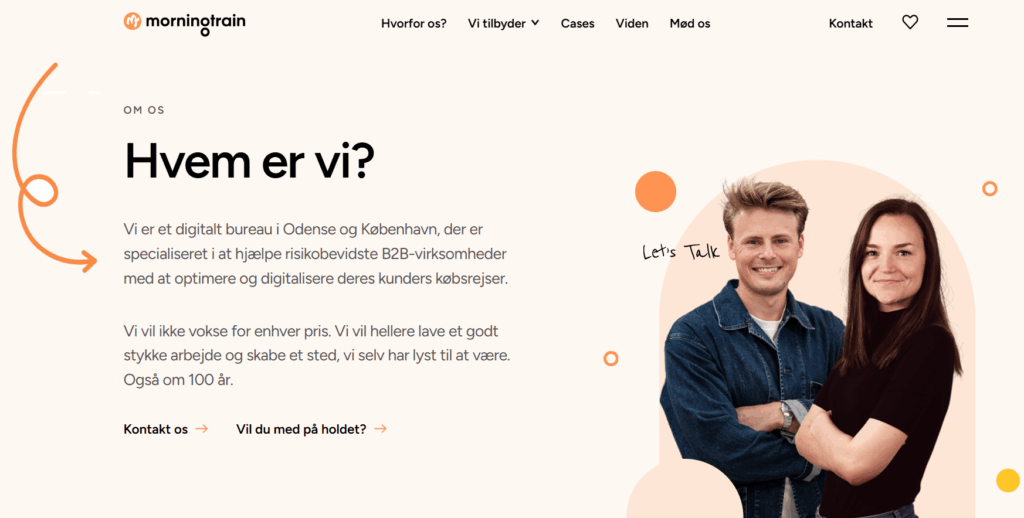
- Descriptive: You can use images or video that supplement the page content, so visitors gain a better understanding of what it is about (for example on the “About us” page).
- Conversion-focused: Images and video can help convert visitors into buyers, as visitors can, for example, see what the product looks like or how it is used.
- Shares: Another purpose may be that you want people to share things on their own website or on social media.
- Links: A purpose that can have a major impact on search engine rankings is getting links from external sites. If you have great content that people link to on their website, search engines can see that your content is relevant and therefore rank you higher in the search results.

- Other search engines: Text search results are not the only place you can gain new customers. There are countless other search engines focused on images and video. Google Images can bring you visitors if you have an image that ranks highly when people search for a relevant query. YouTube can bring you visitors if people search YouTube for relevant videos and your video appears.

Images
Images are the most common form of content, besides text of course. However, you should not plaster your page with images only use images that are relevant to your visitors and the content they are reading.
Different types of images
There are different types of images you can use as content. They have different advantages and disadvantages, but we will briefly list some of the types we find most relevant.
The most important thing, however, is that you include some images on your website.
- Descriptive images: A descriptive image is an image that supplements your article or blog post. Ideally, the image should help people better relate to what you are writing about and gain a better understanding of it. The advantages of descriptive images are that search engines like relevant images, and that it is easier to keep visitors on your site, as many people are more visually oriented.
- Attractive images: An attractive image can be a beautiful photographic image, an image of an appealing object, or similar. Attractive images increase credibility with the visitor, as the article/blog post appears more polished and professional. However, remember that it still needs to be relevant.
- Fun images: Fun images are found all over the internet. You are surely familiar with funny cat pictures or similar with some text on them. These images are called “memes” and are an example of fun images that are easily shared on social media. If you have fun images on your website, there is a greater likelihood that your visitors will share them on their Facebook, Twitter, or similar. This can easily help spread awareness of your business. However, consider whether it fits your company profile.
- Infographics: Infographics are one of the best types of images you can use. They take a long time to do properly, as they require both in-depth research and a skilled graphic designer. In return, there are many advantages to a good infographic. As with descriptive images, infographics help keep visitors on your site. In addition, it can be easier to obtain external links, as people like to “borrow” the information and perhaps even the graphic. This can therefore be an easy way to get links from major media outlets, which can both bring you more visitors and provide strong links to your website that search engines appreciate.
- Stock images: Stock images are images purchased from an online service. They are therefore not images directly tailored to your article/blog post, but they can still be relevant. The advantage of stock images is that it can be easy to obtain good images that match what you are writing about. The disadvantage, however, is that they are very likely to exist elsewhere on the internet, which provides fewer benefits in relation to search engines.
How to insert an image correctly
It is important that you remember to insert images correctly on your website. Search engines are not yet very good at analyzing images, so they need the information you provide along with your image.
First and foremost, it is important that the image and the text on the page match. Search engines use the text that appears alongside the image to determine what the image is about.
It is also important to name the image file with a relevant and unique name (avoid æ, ø and å and use hyphens instead of spaces). For example, you can name your image “black-cat-in-red-sweater.jpg” instead of “IMG03220.jpg”. Try to use your keywords – but only if it is relevant.
When the image is inserted on the website, you have the option to write an alt text. Here too, try to include your keywords. Make sure to create a unique description for every single image you insert, as search engines prefer unique content.
An example of a correctly inserted image in HTML:
<img src=”https://your-website.com/img/black-cat-in-red-sweater.jpg” alt=”A black cat is wearing a red sweater while licking its lips”>
Video
Video is another very powerful format. It is especially good for explaining advanced knowledge, showcasing a product’s features, etc.
If your videos are hosted on YouTube, people can also find your site that way. Not many people use video, so it is also a good way to stand out.
What can you make videos about?
- You can create a descriptive video about your product where you showcase the product’s features.
- You can create a video guide on how to use your product.
- You can create a video guide on what to consider before buying a product like the one you sell.
- You can give talks with relevant knowledge for your customers.
- You can create videos with customer testimonials.
- You can create fun videos that make people laugh and share your videos.
- Etc.
The above is only part of your overall On-page SEO effort.
There are many possibilities, so it is simply a matter of being creative.