


Digitalization
28. May 2019
Native apps vs. progressive web apps: What is best?
Since the first iPhone was released in 2007, apps have been a staple of our daily mobile use. But everything has an expiry date, and at the pace the tech landscape is evolving, it looks as though traditional apps will one day die out in favour of the newer and more modern progressive web apps.
Does that sound dramatic? Yes – but in the app world, you win the game of thrones by giving users the best, easiest, and fastest user experience.
And right now, it looks as though progressive web apps will overtake the classic app on these points in the near future.
Read on and get an introduction to progressive web apps, including:
- The difference between a native app and a progressive web app
- The advantages and disadvantages of native apps and progressive web apps
- Why progressive web apps will overtake native apps
- When you should choose to have a progressive web app or a native app developed
What is the difference between a native app and a progressive web app?
A native app is an app in the traditional sense. In other words, one you download to your device, for example via the App Store or Google Play. Instagram, Snapchat, MobilePay, and WhatsApp are examples of native apps.
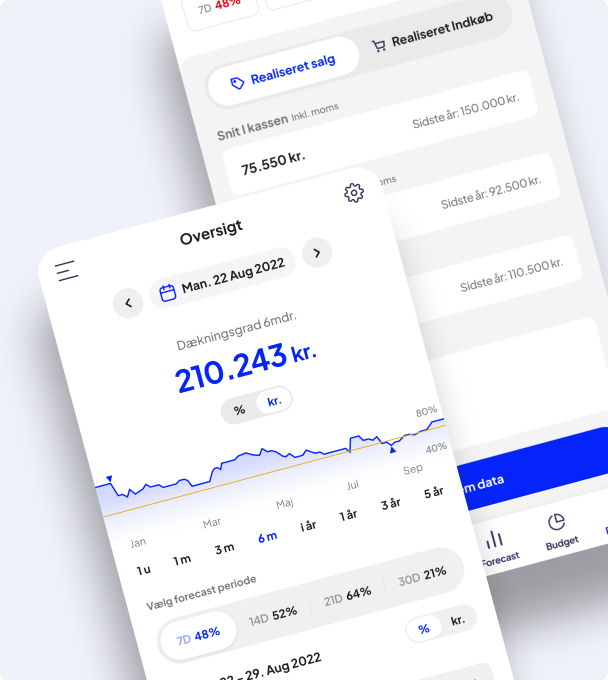
A progressive web app (PWA) is an app served in your browser that loads content from the web at lightning speed. A PWA can also work offline via a service worker a script that automatically runs in the background in your browser. The service worker makes it possible to display your PWA offline, enable push notifications, and add the PWA to your device’s home screen. Trivago, Tinder, Twitter, and Morningtrain’s own Morningscore are examples of PWAs, as they all reside on a remote server, are delivered via the internet, and are displayed in your browser.
A PWA runs through the browser just like a regular website.
Advantages and disadvantages of native apps
Has access to your device/operating system’s features. One advantage of native apps is that you can do a lot with them because they are integrated into the smartphone. A native app can access the smartphone’s operating system and thereby use features such as GPS or the camera, so you can take selfies with a dog filter or similar, which can then be saved to the photo album.
High mobile performance. One of the biggest advantages of native apps is that they run smoothly on a smartphone even without a network connection. This is because they are downloaded to the device, so you are not dependent on your network speed. This means you will typically always achieve high performance in your native app, as all files are downloaded to the device.
Resource-intensive to develop. If you want to make your app as accessible as possible, it must be developed to work across operating systems. In other words, you need a cross-platform app. Over time, this can amount to a great deal of money and many man-hours. Each operating system typically has requirements for the development environment and programming language, which calls for a hybrid developer.
Consumes a lot of memory. Another significant disadvantage is that native apps take up an extremely large amount of storage on your device. Two or three are fine, but if you want all the fun and exciting apps, they will take up a large part of your smartphone’s storage and that affects the phone’s performance.
Does not update automatically. The many ongoing updates are also a disadvantage that comes with Android and iOS apps. Unless you enable automatic app updates in your app store, you have to do it yourself. If you do not update your app, you risk missing out on new features and important security updates.
Advantages and disadvantages of PWAs
Runs through the browser. The ultimate advantage of a PWA is that it runs in your browser. With a PWA, you therefore achieve high accessibility, because your users can access your app without having to go to the App Store to find and install it. They simply open the browser, enter the PWA’s address, and just like that they are in.
Less resource-intensive to develop and maintain. The fact that a PWA runs in a browser also means it runs cross-platform out of the box. This typically makes the PWA cheaper to develop and maintain, because you do not need an iOS or Android developer. A skilled web developer would be able to handle the task for you, as the programming languages would be ones a web developer is typically familiar with.
Updates automatically. The PWA also has the advantage that you do not need to download new updates to your device, as the files are stored on an external server. This means you avoid the hassle of having to update once a week. Automatic updates ensure that the user is always served the latest version of your PWA every time they visit it—without lifting a finger.
Fast load time. One of the requirements for a PWA is that it must have an extremely fast load time. The fast load time is an essential advantage, as many users are impatient and expect a quick load time. In fact, 53% of users are not shy about leaving if your solution takes more than 3 seconds to load.
Dependent on a good network. Among the disadvantages, we must highlight the PWA’s dependence on a reasonably good network connection. If your connection is not particularly good, the app can neither fetch new content nor update. However, the service worker has functionality that enables background sync, which stores the action you have requested and then performs it when you are connected to the network again.
Cannot fully leverage the smartphone’s features. Another disadvantage of PWAs is that they cannot access the smartphone’s features as well as a native app can. Although we have actually come far enough that you can access your smartphone’s camera via a PWA, it is still limited which features you can currently access and what you can do with them.
Therefore, native apps will die out, while PWAs will spread
Native apps will die out because they will one day be overtaken in functionality and user experience by PWAs. PWAs are already well on their way to achieving the same quality and performance as native apps, and it is only a matter of time before they topple the old king the native app from the throne.
There is also the fact that native apps take up a lot of space on our devices. This can have consequences for your device’s performance, but you do not experience this problem at all with PWAs. This is simply another nail in the coffin for the native app, although there will of course always be cases where a native app makes more sense.
Should I choose a PWA or a native app?
Ultimately, this question depends on your needs and your specific use cases for the app. That said, in most cases a PWA is the strongest choice. Partly because there is a shorter path to the user, but also because the development team can be smaller, as it does not require developers who can build for both iOS and Android. With a PWA, you get a functional solution with endless design possibilities that is also easy to distribute.
However, the native app is not without merit. If you want an app developed where the purpose is to facilitate frequent interaction and engagement between the user and the app, and between users, then the native app is the best route. Likewise, you should choose a native app if your app needs to access many of the smartphone’s features, so the user can create content and share it in the app.
Although we predict that native apps will one day die out, they are still currently slightly ahead in terms of ease of use and user engagement. Right now, PWAs lag a little behind on these points, but they will overtake native apps in the near future.
However, if you have no intention of building a hyper-complex social media platform like Instagram or Snapchat, a PWA will, in most cases, be the best solution for you.