

WordPress
28. August 2025
Shopify Plus vs. WooCommerce as a B2B webshop
Both Shopify Plus and WooCommerce can power a solid B2B webshop. They are very different tools. Shopify Plus gives you a stable, hosted solution with limited flexibility. WooCommerce, on the other hand, is open, flexible, and built for those who know their business requires elements that do not come “out of the box”.
Content
What should I choose? Shopify vs. WooCommerce B2B-modules for Shopify B2B-modules for WooCommerce How we have chosen FAQWhen do you choose one over the other?
There is no doubt: both Shopify Plus and WooCommerce are relevant solutions if you are considering launching a B2B webshop.
But as the intro mentions, it is a bit like comparing apples and pears, so to help you make the choice, we have tried to create a fair comparison of two of the best systems.
If you want the nuances, read the full blog post. Otherwise, here is our rough take on when to choose one system over the other:
Shopify Plus
✅ When you want to get started quickly and do not have many custom needs.
✅ If you would like to pay less for implementation, but are okay with a slightly higher operating budget.
✅ If your business logic and needs match what has gradually become standard in B2B.
WooCommerce
✅ If flexibility and custom features are important to your business model, or to what you want to use a shop for (customer portal, product configurator, etc.).
✅ If you would like more styling options
✅ If you need a widely used and intuitive CMS to maintain content.
Shopify Plus vs. WooCommerce – the honest comparison
| Shopify Plus | WooCommerce | |
|---|---|---|
| Flexibility | Low – you work within Shopify’s framework | High – everything can be tailored if you have the right developers |
| Scalability | Very high – hosted solution, so you avoid operations | High – but you (or your partner) must handle hosting and optimisation |
| Pricing | Starts at around DKK 20,000/month + apps + they take a cut of your revenue | Hosting + development – can vary (expect approx. +DKK 200,000), typically cheaper to run |
| Ownership | Shopify owns the platform and sets the framework | You own your entire webshop and can move freely |
| Ease of use | Super easy for non-technical users | A slightly steeper learning curve – but you get full control |
| Integrations | Many – but often with monthly fees | Almost unlimited – and can be built custom without licences |
| B2B suitability | Good, but dependent on paid apps | Excellent – everything can be adapted to B2B logic |
| When does it make sense? | If you want to get started quickly, have standard needs, and would like to avoid technical work. Implementation costs are also lower. | If you want a platform that can be tailored and grow with your business |
Good B2B modules for Shopify
Shopify Plus can do a lot, but for B2B you will typically need to extend it with apps:
- Wholesale Club – gives you customer-specific prices and discounts.
- Bold Custom Pricing – flexible pricing agreements for your customers.
- B2B/Wholesale Solution – enables minimum purchases, fast ordering, and customer segments.
- Advanced Shipping Rules – keeps shipping under control when you have different terms for B2B customers.
The advantage of these apps is that you can add the features quickly. The downside? You often pay per month for each app – and customisation can be limited.
Good B2B modules for WooCommerce
WooCommerce does not have apps in the same way – but it does offer plugins and custom options:
- WooCommerce Wholesale Prices – different price levels for different customer groups.
- Dynamic Pricing & Discounts – flexible pricing logic for even complex agreements.
- Custom solutions – if you need something very specific, it can be developed on top of WooCommerce.
As an experienced WordPress agency, we recommend that you remain sceptical about which plugins you use, in order to maintain what we would call “a solid and secure WordPress setup”.
What the above extensions have in common is that they are well maintained, secure, and easy to configure.
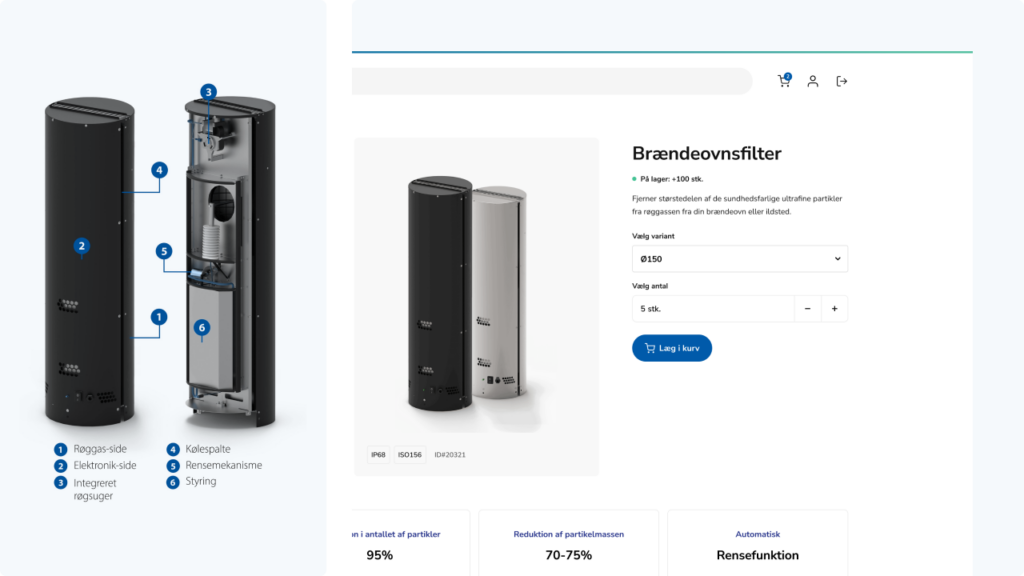
Why we swear by WooCommerce and not Shopify
It comes down to the type of development company we are, and the product we offer.
We work with WooCommerce because it fits our DNA as a development company. We are not chosen to click “install app” – we are chosen because, as a rule, we have 70–80% of the solution ready, which then needs to be configured and styled. That way, more of the budget goes towards building the business-critical features.
It is the final 20–30% of the project that requires custom coding, which is the main reason we are chosen. And that is why we swear by a CMS that makes custom coding easier.
It is that simple. Shopify Plus is a good solution; it just does not fit into our product mix.
FAQ
Is Shopify Plus cheaper than WooCommerce?
Which platform is best for B2B?
Can I switch from Shopify to WooCommerce (or vice versa)?
What if I just want to get started quickly?