

Digitalization
23. January 2022
Incorporate behavioural economics into your webshop
The concept of “behavioural design” will always be hot. Because it is derived from behavioural economics, which is based on how individuals make economic decisions. This opens up major new opportunities for webshop owners—provided they think it through.
Behavioural design is a method that uses insights from psychology, sociology and anthropology to influence how people (your customers) make decisions. Humans are irrational beings who make choices based on impulses and illogical conclusions even if we like to tell ourselves otherwise!
The field of behavioural design is still young and is primarily used by governments, ministries and other political bodies to influence citizens’ behaviour. However, there is already sufficient data and empirical evidence to show you how to build a professional webshop that is based on people’s subconscious behaviour. This will significantly increase your webshop’s revenue as you gain more satisfied customers.
We are merely a purchasing-powerful animal
We like to believe that we are rational beings, elevated above our own animal origins. The truth, however, is that many of the choices we make are rooted in genetic impulses.
For example, there is a part of our brain (for the nerds, it is called the “amygdala”) that decides for us whether we should flee or fight when we feel uncertain. In prehistoric times, this happened when you encountered a wild animal on the savannah.
Today, most people recognise it from having to write a major academic assignment, where it can be hard to see where, how and what to start with. As a result, many end up postponing the work for just one day and then tell themselves the same story the next day.
In an e-commerce context, a study conducted by DIBS has shown that the five most common reasons a customer abandons an online purchase are:
- Uncertainty about the terms and conditions
- Lack of product and service information
- Technical issues
- Lack of trust in the website
- The payment process did not work
These reasons account for 75.4% of the reasons people abandon online purchases. Overall, all of these reasons stem from some form of uncertainty, which then leads people to abandon the purchase (flee).
We buy from those we like and trust
In e-commerce contexts, fleeing refers to not completing a purchase. Sometimes the customer buys the item elsewhere. Other times just like with the academic assignment they postpone the decision or do not make one at all because they do not understand, or feel uncertain about, the item they were considering buying.
Imagine the scenario where your mother needs to buy a computer online. It is a product she likely knows very little about, and it costs a lot of money. That alone fills the purchase decision with uncertainty. Her customer journey might start on a webshop she has heard about through her network or from a TV advert.
She now has to make a choice based on PC specifications she does not understand, among hundreds of computers that look quite similar to her. Often, it would end with her buying the one her family tells her to buy. Alternatively, she might go to the nearest physical store, where a trustworthy expert can help make the choice feel more certain & safe.
Remove too many choices from the customer
Psychologist and behavioural economist Daniel Kahneman reports that the more variables a person is exposed to when they have to make a choice, the greater the chance that the decision will be postponed. In the worst case, the decision is not made at all. Translated to e-commerce again, it is not about having a lot of information, but the right information.
As a webshop, you need to identify which need your product(s) fulfil for the customer, and then present the information accordingly.
Most webshops “just” make a lot of information available about the products and then hope the customer will figure out which product features match the need the customer wants covered.
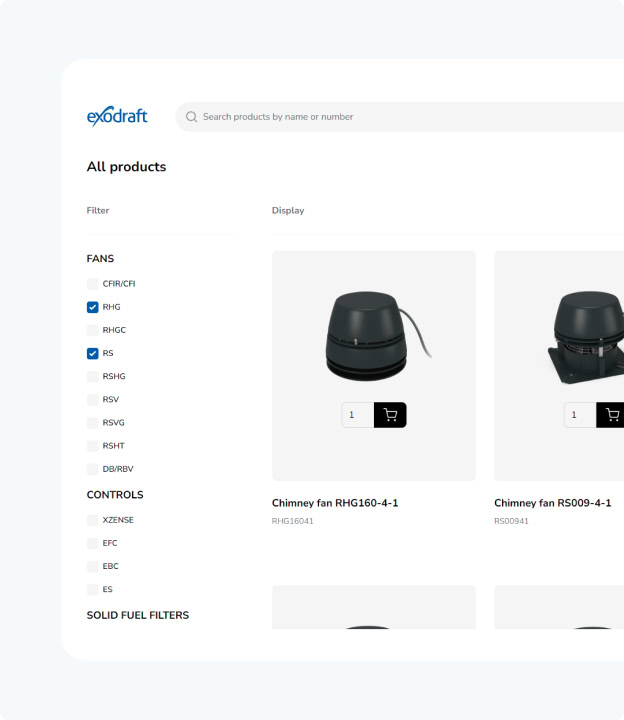
Instead, you could start by categorising your products by who should buy them (explanation follows). After that, your task as a webshop is to make it as easy as possible for the customer to identify with these products.
If we continue with the computer example, the solution could be to categorise your product(s) by: Gaming, work and study. Most people will be able to identify with one of these categories when choosing a computer. If you go the extra mile for the customer experience, you could illustrate the difference with graphics (see the image on the right).
You have now helped the customer by making it easier to make a choice based on a few variables they actually understand. The customer no longer has to compare 200 lines of specifications they do not understand. Now the customer simply needs to choose a computer that is good for what they need it for and at the price they are willing to pay.
Cognitively, we build trust in people who help us understand something we did not understand before.
Just as you trust the teacher who made it possible for you to pass the exam you never thought you would get through. It is a survival mechanism in your brain that makes you seek out people who have your back. This mechanism is triggered when trust is created—for example, when other people give you a sense of security.

Intelligent and impatient animal
When consumers shop online, their patience is usually minimal. This means you need menu items on your webshop that make it easy and intuitive for the customer to navigate and find the desired product.
The evidence tells us that 70% of good web design is whether your customer can understand how to use it. Therefore, you should drop cryptic menu items and avoid thinking only about what you/you all like. The focus should always be on what your customers prefer, even if it conflicts with your own preferences.
Technically, this also means that during webshop development you must ensure the site loads quickly on all devices. Make sure the webshop is not heavy, and make sure you have chosen the right server solution for your webshop that can handle the traffic to the webshop.
Make your flow easy and intuitive
We know that people are bad at making decisions and that they are impatient online. This means your checkout flow should not have unnecessary steps. It is also important that no new information appears in the checkout flow that the user has to consider. This could be, for example, shipping prices or delivery time your customer must know all of this before they proceed to payment. Otherwise, you give the customer a new reason to feel uncertain about their decision what if there is something else they have overlooked?
You should also not overdo the number of delivery options and prices. Have a maximum of three options. It is not worth losing the customer because they cannot decide whether they want to wait an extra day and save DKK 20.
The same applies to payment options. DIBS has examined Danes’ associations with the different payment solutions. It was clear that Danes see MobilePay as the fastest solution, PayPal as the safest, and payment cards as the most preferred. You should choose payment options that accommodate different customers’ wishes and needs but limit yourself so you do not overdo the selection.
As a final comment, it goes without saying that the technology must work; otherwise, your webshop will seem untrustworthy and insecure. A good integration of payment and shipping systems should be so seamless that the customer does not feel it is a combination of multiple systems.