


Digitalization
19. January 2016
Speed optimisation: Your website must not be slow!
When you build or manage a website, it is very important to pay attention to its speed and core web vitals. Having a slow website can therefore have a wide range of consequences for your business and your brand.
There are a handful of simple reasons why a website is slow. It often takes no more than a few hours to fix, but it can add several seconds to your load time.
6 things you MUST do to get a faster website:
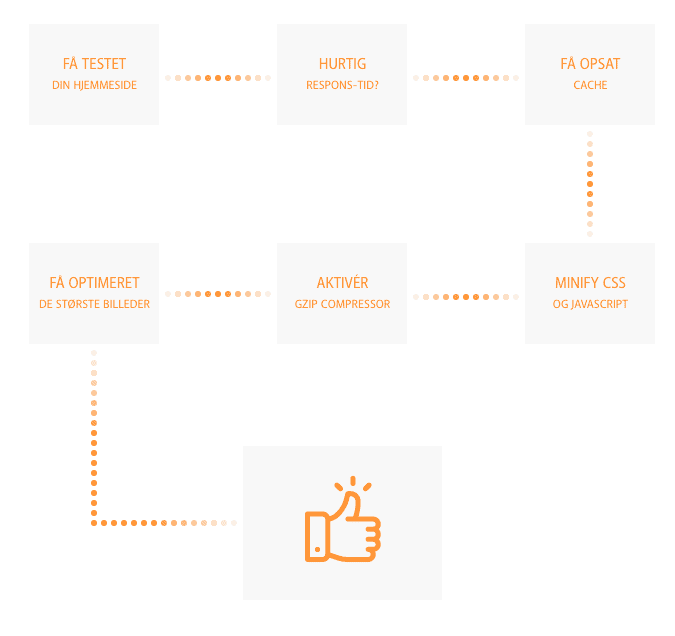
- Test your website here: www.gtmetrix.com (anyone can use it).
- Find out whether your web host delivers a fast response time, for example by using pingdom.
- Set up caching, among other things by adding Expiry headers in .htacess.
- Minify CSS and JavaScript (and combine files if there are many).
- Enable Gzip compression.
- Get the largest images optimised, for example with these tools: www.tinypng.com, www.jpegmini.com or Kraken.io.
If several of these things are not in place, you may miss out on valuable seconds.
But why is speed optimisation necessary at all?
Users love it!
Have you ever been on a train with virtually no internet connection and tried to load a random website?
When, in such a situation, it takes you 5, 10 or 15 seconds to load a website, you are already on to Facebook. Facebook has managed to create a “fast website”, despite being gigantic and containing many millions of images, video files, status updates and much more.
By having a fast website, you create an experience for the user that is far more pleasant, and therefore a site they do not click away from immediately. If you also run an online shop, there is little point in it taking 5–10 seconds to load every single page if you have to click 8–10 times to find the right product and buy it.
If this can be reduced by half, then with 10 clicks at 5 seconds each, you have already saved your user 25 seconds of waiting time during a purchase process and they will appreciate that! In addition, numerous tests have shown that even small speed optimisations, resulting in a slightly faster website, can have very positive effects.
Google loves fast websites!
An additional small bonus is that Google is based on showing, in its search results, what users are most likely to like.
Since users do not like slow websites, your page will automatically be pushed down if it is not fast enough. This is for two reasons:
1. When scanning your website, the Google bot can see whether your website is slow or fast.
2. Google uses data from everyone who is logged in. From this, they can see whether your users quickly leave your website, which they often do when loading times become too high.
There is, of course, much more to say and do, but you are on your way!