


Digitalization
30. March 2021
Drop your obsession with ROAS, POAS, CPA and ROI
Digital marketing really gained momentum when it gave the modern marketer the tools to track which activities delivered strong results, and thus repeat success by focusing efforts on the obvious activities. But do not be dazzled by numbers and measurement points—they can mislead you and limit your potential.

Why you should read this post
I have personally benefited from a world where I knew exactly what I was succeeding with and what I should stop doing. It made my life so much easier.
But now I see a widespread tendency among marketers, which is to view the world as black and white. If you go on LinkedIn, you will be bombarded with: “what the right metric is to measure performance by, and why other methods are bulls**t”.
But wait, is that not exactly what you are doing right now? – you might be thinking. Yes, yes, I am probably no better myself 😉
But… the difference is that I do not claim there is one right thing to do.
Everyone knows the cure for cancer
You have probably come across countless “truths” and measurement metrics that are simply the new hot thing! My message is that you should not be tempted to follow a metric entirely without skepticism.
I see marketers making statements such as:
- “124 MQLs at a CPA of X DKK”
- “A ROAS of 34”
- “Revenue increase of 150%”
- “ROAS does not tell you about your profit use POAS instead”
There is nothing wrong with the statements above when it comes to marketing yourself to new customers. But you need to understand that success cannot be read that simply.
Let me elaborate:
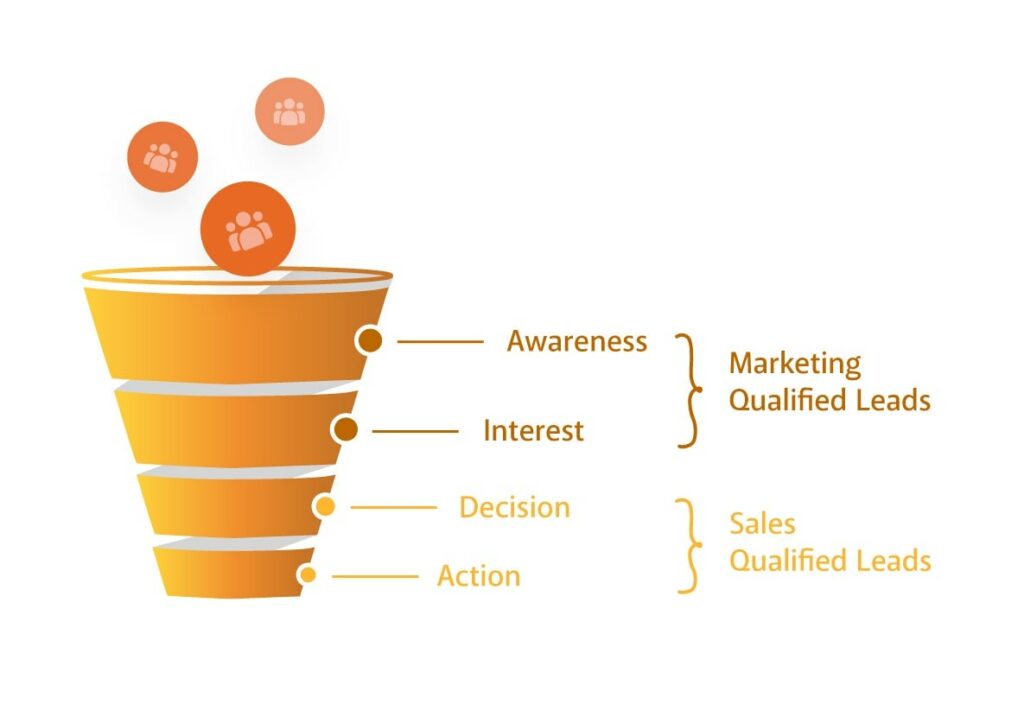
- The number of MQLs does not say anything about their quality. How many become SQLs? And are those sales calls a waste of time? An MQL (Marketing Qualified Lead) can also just be e-book downloads i.e., free material which does not make them a lead.
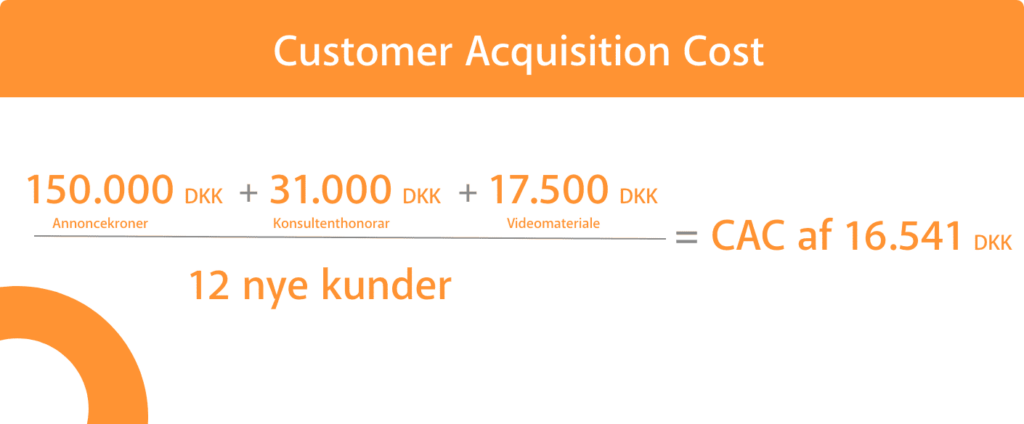
- A CPA (cost of acquiring a lead) or CAC (cost of acquiring a new customer) tells you nothing if it is not compared against the value of a lead. And here we are talking about relevant leads (Sales Qualified Lead = SQL).
You calculate that by answering the following: How many leads does it take to get one customer (in %)? And what is an average customer worth (kroner/øre)?
- ROAS (Return On Ad Spent) tells you how much revenue you have generated from the ad budget you spent.
A high ROAS means you have held back potential sales volume. ROAS must also be viewed in relation to the company’s contribution margin across its product portfolio.
If you have a high contribution margin, then a high ROAS is downright foolish—because you potentially reduce your scaling potential by a factor of x10–20. - An increase in revenue is not impressive in itself. Again, we do not know what the cost has been or what the contribution margin is… blah blah blah…
- POAS and ROAS are, in my view, a populist choice. The point is that you want to check the profit generated per ad krone spent (Profit On Ad Spent = POAS).
The challenge is that with POAS you completely neglect the long-term business. You compare your cost against profit here and now, instead of factoring in: Do customers buy again? Does it drive direct sales in the future? What about referrals?
A good rule of thumb for all businesses is that you should buy 1/3 of your customers. The remaining 2/3 should come from existing customers, repeat purchases, direct sales, referrals, and the like. ERGO: A customer’s here-and-now revenue is not representative of the customer’s total value.
A world in colour kill the black-and-white view
The point is not that the metrics above are “bad” or “wrong”. The point is that, in isolation, they provide no insight into performance.
Instead, you should select 3–5 metrics to compare against each other at an operational level (month to month), and 2–3 metrics you review at a tactical level (1–5 years).
If, for example, you want to focus on POAS, then compare it against:
- Revenue volume
- The trend
- Average order size
CPA on leads should always be compared against the lead conversion rate, as well as the value generated from those customers.
And ROI must be compared against the total return not just the here-and-now order. Zalando is as big as it is because they have understood that a customer who buys once buys, on average, x times, and over 1 year has an average value of y.
Therefore, ROI on a customer is the value they generate for the business over a year versus the investment required to acquire that customer. That makes it worthwhile for Zalando to pay many times more to acquire customers. Ergo: They can afford to take a larger share of the market.
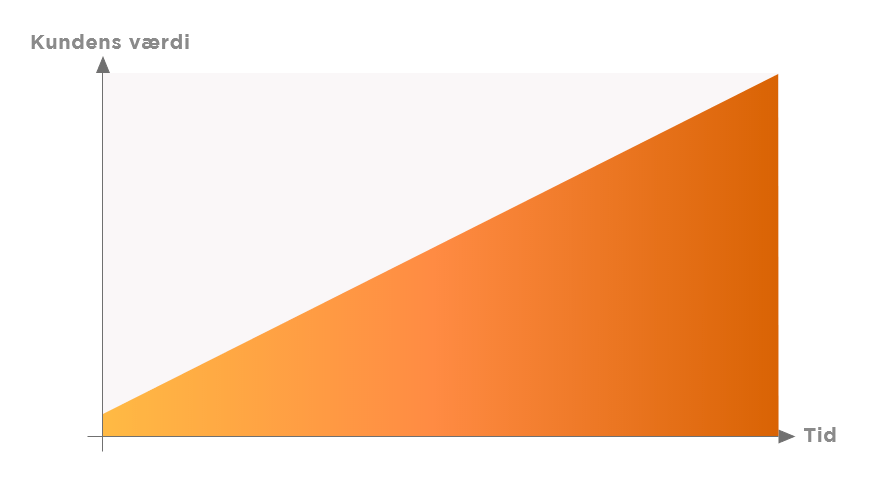
If you only look at it in black and white and focus solely on, for example, having a high POAS, then you are so focused on being profitable here and now that you completely neglect the fact that the customer will most likely buy again—or recommend you to friends or family.
In doing so, you disregard the customer’s true value and decide that you will only pay an amount to acquire the customer based on the business the customer gives you here and now—and not the business they will also give you tomorrow and in a year.
CLV for life!
If I had to choose one metric to base my decisions on, it would unquestionably be Customer Lifetime Value (CLV).
CLV gives you insight into the most important metric for any marketer: What an average customer is actually worth over time.
Once you know that, you also know what you can “pay” to acquire the customer. A good rule of thumb is that you can spend 30% of the customer value on acquiring the customer. This also includes sales costs and salaries, so let us say 20% on marketing spend.

CLV tells you:
- What an average customer is worth (over time)
- What you can afford to pay to acquire customers
CLV does NOT tell you:
- Which channel generates my revenue exactly
- Which campaign/effort/keyword makes the difference
But very few companies have a cross-device tracking setup that allows you to know the above precisely anyway, and as we kill cookies, it will only get harder. Therefore, CLV is the closest you get to reality, in my view.
50% of your marketing spend drives your entire business; the remaining 50% is wasted—and you do not know which half is which, and you have to live with that. And you can—as long as your CLV is satisfactory.
Read more about customer lifetime value and the calculations behind it.
What do we do ourselves?
At Morningtrain, we make a living from the product we sell. That is, marketing that generates leads, which become customers, which become upsells, etc.
We know that customers buy again and recommend us to others. Therefore, we do not use metrics that determine profit here and now, because we can only determine a customer’s profitability after 1 year.
We use the following model:
Operational level
- Website traffic
- Social media followers and brand searches
- Number of leads
- CPA on leads
- Close rate from lead to customer
Tactical level
- CLV (Customer Lifetime Value) – viewed over 1 year for simplicity, although the lifetime is probably closer to 4–5 years.
- Cumulative sales volume (and split between new sales vs. upsells)
Perhaps most importantly, we use different KPIs depending on which marketing channel we are looking at.
- Social media – number of followers and engagement rates (branding)
- Search engine optimisation and Google Ads – number of leads and CPA
- Brand searches – trend in traffic figures
- Sales activities – close rate from lead to customer
I hope it all made sense. Now you are equipped to make sensible, long-term decisions based on a nuanced dataset. 😊