


Digitalization
22. February 2022
What are meta tags?
Meta tags are small pieces of code that contain information about your website. Meta tags are therefore used to describe your website with a “headline” and a “summary”.
What are meta tags used for?
In an SEO context, meta tags are often referred to as the title tag and meta description, and these are the two text elements that make up most of your listing on search engine results pages.
Meta tags help you provide a brief description of your page’s content, and by creating strong meta tags you can increase your click-through rate.
The meta tags covered in this blog post are relatively easy to implement in the most common CMSs, provided your groundwork has been done properly. So, what is proper groundwork? The foundation of all SEO work lies in keyword research, which your meta tags should also reflect. It is therefore important that your most relevant keywords appear in your meta tags.
You can also read about extensions that you can add to your SERP (stars and FAQ).
What is a title tag?
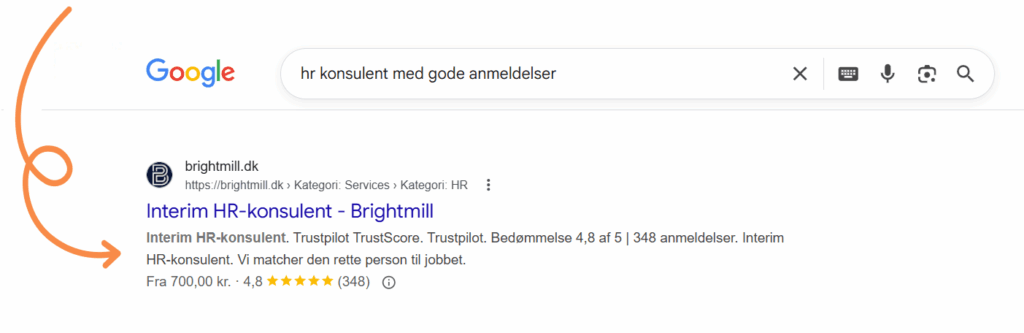
A title tag (also called a meta title or page title in Danish) can be described as the headline for your page. This is where you have the opportunity to highlight the page’s headline. Therefore, remember that your title tag is the first thing users notice.
However, you should be aware of several elements when creating your title tag.
Title tag (the headline):
- Should be between 50–60 characters
- Should include the keyword(s) you want attention for
- Make it unique – stand out
What is a meta description?
A meta description is a short summary of your page’s content. The meta description is where you can tease the page and what readers can expect to learn about.
However, there are a few elements you should be aware of when writing your meta descriptions:
- Should be between 135–160 characters
- It is important not to exceed 160 characters more details further down
- Accurate description of the page’s content
How do title tags and meta descriptions help my SEO optimisation?
Title tags and meta descriptions help create relevance around your pages, and you will therefore find that your pages receive more organic traffic. Title tags and meta descriptions are the texts consumers see first so think of your meta tags as a shop window.
But how do title tags and meta descriptions affect your on-page SEO? To keep it short, title tags and meta descriptions do not directly affect your ranking on Google.
What does lead to a higher ranking, however, is the increased interest your snippet receives. By using a title tag and meta description that create relevance for the consumer, the click-through rate will increase.
And if there is one thing Google likes when it comes to your ranking on Google, it is higher click-through rates and increased interest from consumers.
How does Google handle your title tags and meta descriptions?
Google can change your title tag and meta descriptions depending on how users search. Therefore, there is no guarantee that your title tags and meta descriptions will be displayed exactly as you wrote them.
As mentioned above, there are some “rules” for how long your title tags and meta descriptions may be. I strongly recommend that you follow them so you can control what is shown when consumers find your page.
Google is very “smart”, because if your meta description is too long, you risk getting the famous “…”. Likewise, if your description is too short, Google will instead pull relevant content from your page. So, to keep control over what is displayed, I recommend that you follow the “rules”.