

Content
21. October 2022
How to create effective LinkedIn ads
Make sure to place your primary message in the headline, use compelling language, and use elements such as numbers, colours and emojis (but not too many). In addition, you need to capture the reader “above the fold”. In this post, you will get these and several concrete tips on how to improve the quality and…
Tips for writing LinkedIn ads:
- Make sure your content actually provides value to the reader
- Use language in your ads that appeals to the target audience
- Use numbers in your ads
- Guide the reader’s eyes with emojis
- Capture the reader “above the fold” (before ‘read more’)
- Colours capture attention
- Use different LinkedIn ad formats
The tips above are not ‘hacks’, and you still need to put real effort into your content. However, it is a good checklist for how to raise the quality of your ads a notch.
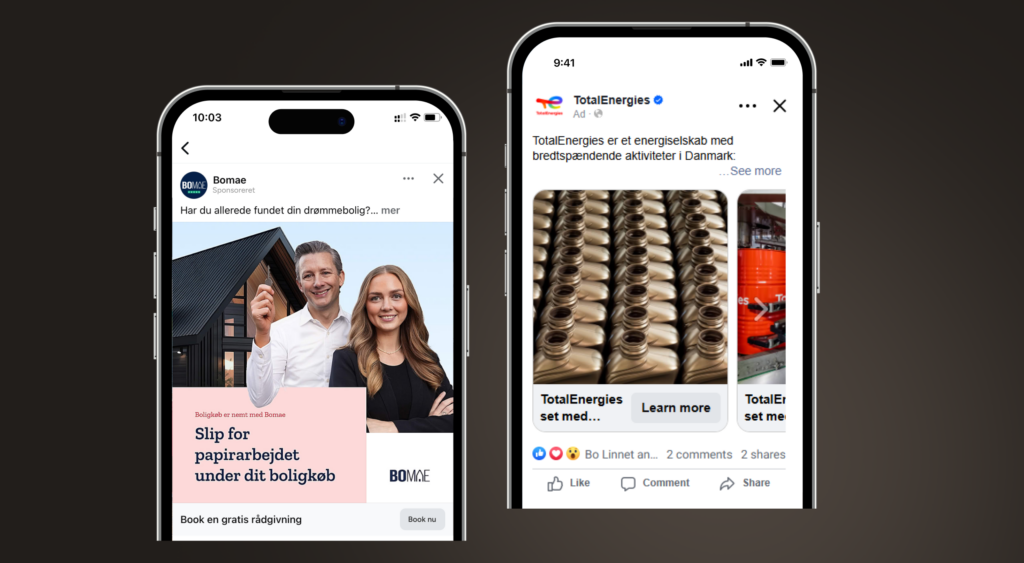
So you have dived into LinkedIn’s Campaign Manager, and worked hard on audience selection and the technical setup of your campaigns only to drop the ball because your LinkedIn ads end up being half-hearted, something you threw together quickly.
We see this far too often in companies. That is why we have tried to compile our advice on how to create better LinkedIn ads for lead generation.
To help you, we have put together this list, and we elaborate on the points below so let us get started.
1) The first tip is always the best
The most important tip is the first one. When you run ads on LinkedIn, what determines performance is not technical wizardry in the ad engine or clever little “hacks”. No the primary reason LinkedIn campaigns perform is the content you offer your target audience, i.e., the material they receive by filling out the form (the brochure, case study, whitepaper, e-book, etc.).
So what is good content? It is actually relatively simple. Content that genuinely provides value to the reader in the form of real new knowledge, insight, understanding or tools is good content.
So when you create your material, you should constantly consider whether it generates value for your readers, or whether you have simply produced something so your agency can run LinkedIn ads. The latter rarely succeeds.
At the very least, when you ask for people’s attention, you should give something in return that is worthy of that attention and that is why we have been very careful with this e-book.
What you should create material about is the information people frequently ask for in a sales meeting. Based on the sales team’s input about what customers ask about, you can decipher what material they would download.
It could be:
- A case study showing how your methodology or product makes a tangible difference
- Knowledge within your field (e.g., how to optimise processes or production facilities)
- Interesting findings from your market. You have a lot of experience across companies. You can share your findings.
- A guide to something self-help related
- A pricing example for a solution.
- And much more.
2) Use numbers in your ads
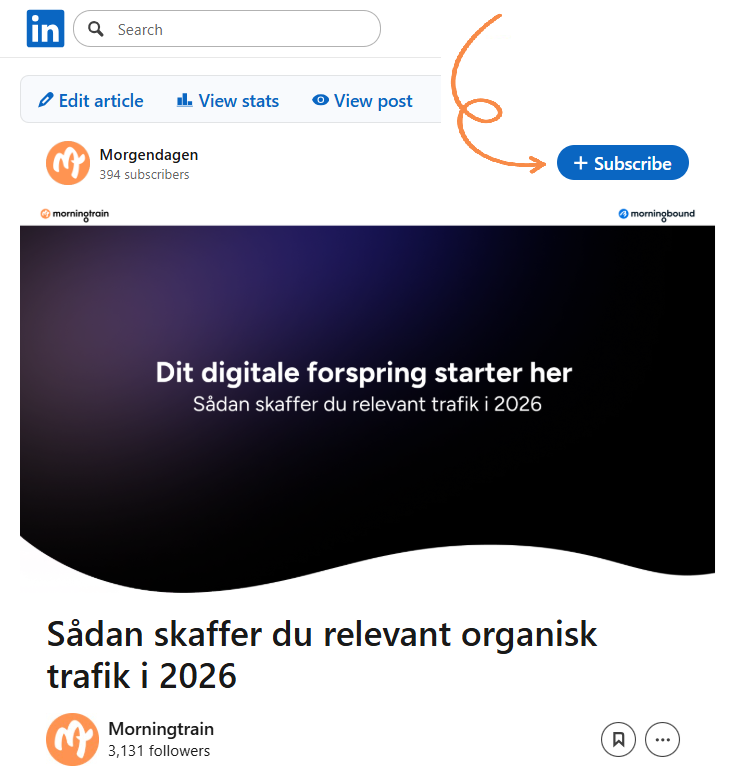
Just like in Google Ads ads, it can be beneficial to use numbers in your headlines. It provides context for your readers and a specific “promise”. In addition, numbers are eye-catching whether they are percentages, years, number of cases, days left until the trade fair opens, or something else entirely.
3) Put your primary message in the headline
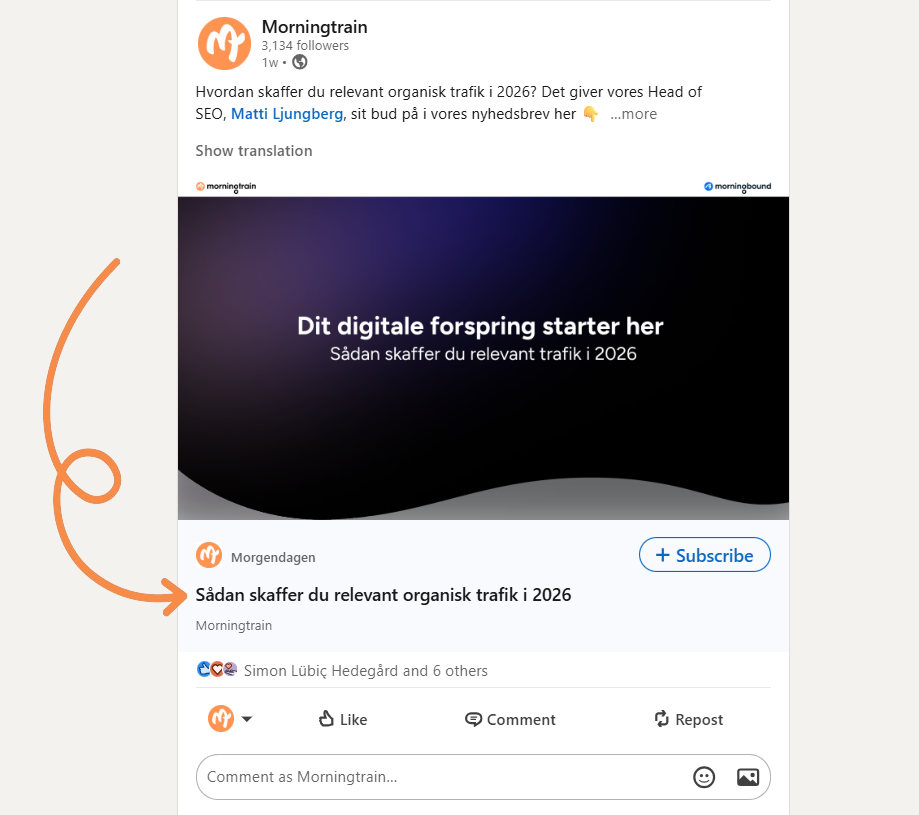
Write your primary message in the headline, as readers use this field to understand the overall message of your long text. In other words, the field functions as a kind of “why should you read this?”.
You can also benefit from placing your primary “payoff” in the visuals, as long as you keep it short. Nobody wants to read a lot of text on an image.
4) Guide the reader’s eyes with emojis
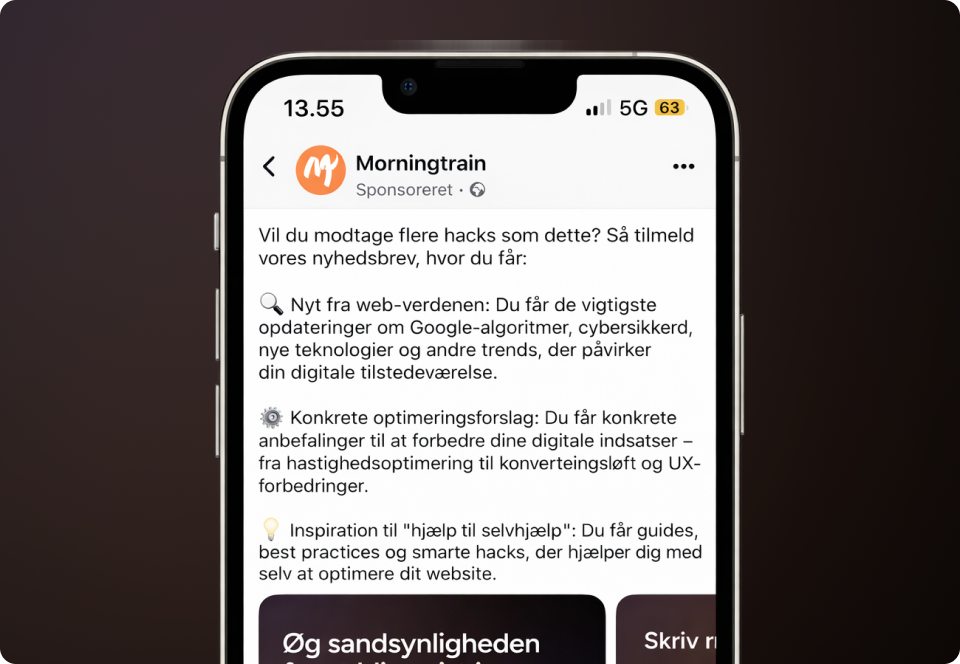
Use emojis to highlight your points you decide how “goofy” it can be. And before you say “you should not use emojis in business”, let us stop you right there. Everything you see on LinkedIn is B2B, and you will see many companies use them precisely to guide their reader.
5) Capture the reader “above the fold”
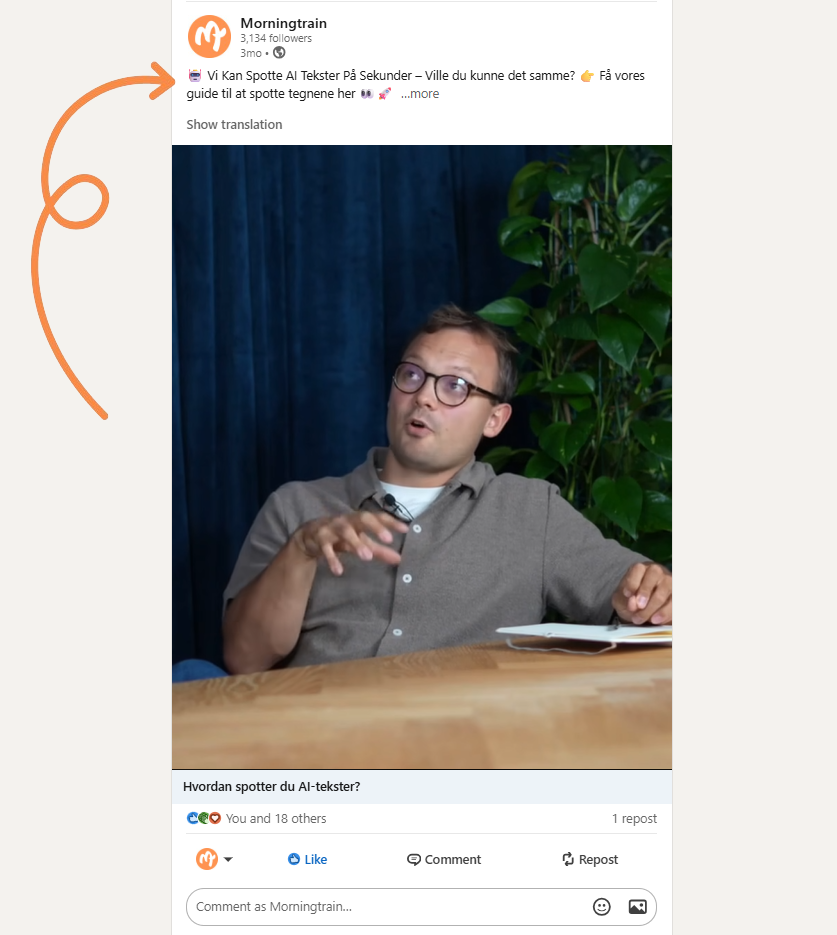
Play a little with your “above the fold” so you incorporate either a cliffhanger or the most important part of your message in the text that is visible before someone clicks ‘read more’.
6) Colours capture attention
Use colours in your visuals and preferably movement as well. Both are eye-catching and therefore capture more readers’ attention.
7) Use different LinkedIn ad formats
Do not commit to a single ad format test traffic, video and lead campaigns. You do not know what resonates best with your target audience, and it may be that the reason your lead-generation campaign is not working is that the target audience is earlier in the decision-making process, where they are not yet ready to give a company their contact details.
By using different formats, you gain a better understanding of where the target audience is in the decision-making process, and therefore which type of content they should be exposed to.
Also, play with the language. Put effort into what you write so it is understandable for the target audience, and not just so it sounds “slick”.
Enjoy.